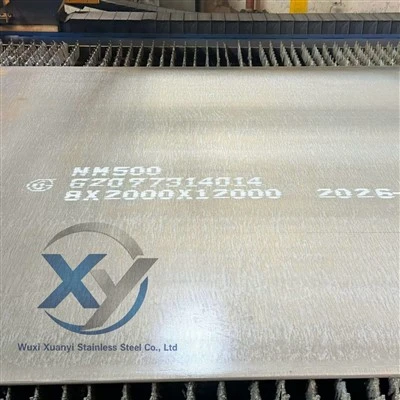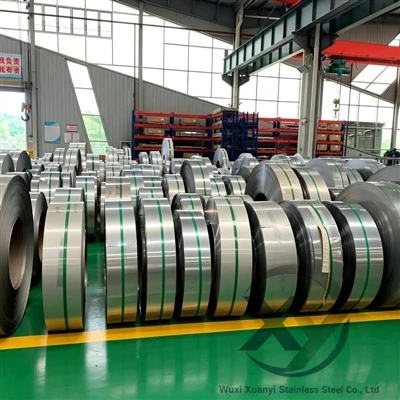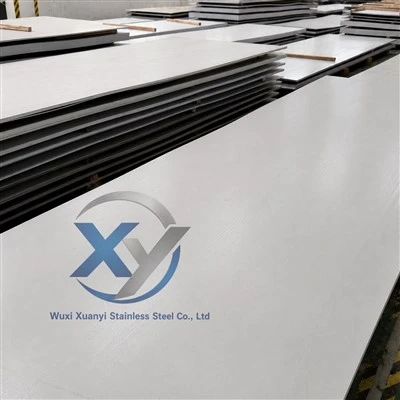


If you've ever ordered stainless steel sheets for a project-whether it's a commercial kitchen backsplash, a custom industrial fabrication, or a residential architectural feature-you've probably caught yourself wondering: "What's the weight of stainless steel sheets per square meter?" It's not a trivial question. If you're designing a rooftop railing, calculating shipping costs for a large order, or ensuring structural support for a storage tank, that number can make or break your budget, your timeline, and even the safety of your final product.
As a stainless steel sheets supplier, I get at least three calls a week from customers asking this exact question. Most are surprised when I tell them there's no single answer-because stainless steel isn't a one-size-fits-all material, and even small variables can shift the weight of a square meter by dozens of pounds. Today, I'm breaking down the science behind that weight, cutting through the industry jargon, and sharing the exact calculations we use to give our own customers accurate, reliable numbers every time.
First, let's start with the basics: what even defines a "square meter" of stainless steel sheet? For our industry, a sheet is a flat, rolled product, not a coil or a plate, with a finished flat surface and a thickness measured in millimeters or gauge (we'll get to gauge in a minute). A square meter is a perfect 1m x 1m piece, so the area is fixed at 1 square meter, but the thickness and alloy-two non-negotiable factors-are where the weight changes.
The core formula for any sheet metal weight is straightforward: weight = density x volume. For stainless steel, density is the starting point, but that's not a static number. Most common stainless steel alloys fall in a density range of 7.75 to 8.0 grams per cubic centimeter (g/cm³), with two alloys being far more popular than all others: 304 and 316.
304 stainless steel, the workhorse of commercial and residential applications, has a density of 7.93 g/cm³. It's the go-to for kitchen equipment, food processing machinery, and general architectural trim because it's affordable, easy to fabricate, and corrosion-resistant for most indoor and mild outdoor settings. 316 stainless steel, used for marine applications, pharmaceutical equipment, and chemical processing, has a slightly higher density: 8.0 g/cm³. The extra nickel and molybdenum in 316 boost its corrosion resistance, but those heavier elements add a tiny bit to its weight, too.
Now, volume is where thickness comes in. Remember, we're working in meters, so let's convert units to avoid mistakes. A cubic meter is 1m (length) x 1m (width) x 1m (thickness). For our 1 square meter sheet, that simplifies to volume = 1m² x thickness (in meters). For example, a 1mm thick sheet is 0.001 meters thick, so its volume is 1m² x 0.001m = 0.001 cubic meters. Multiply that volume by the alloy's density, and you get weight per square meter.
Let's do a real-world example with 304 stainless steel, the most common alloy we supply. Using 7.93 g/cm³, convert that to kilograms per cubic meter (since that's what we use for shipping and quotes): 7.93 g/cm³ = 793 kg/m³ (because 1 g/cm³ = 1000 kg/m³). Now, take a 1mm thick sheet: weight = 793 kg/m³ x 0.001 m = 7.93 kg per square meter. For a 2mm thick sheet, that doubles to 15.86 kg/m². A 5mm thick sheet would be 39.65 kg/m², and a 10mm thick sheet (often called "plate" instead of "sheet" in industry terms, but sometimes lumped together) would be 79.3 kg/m².
If you're working with 316 stainless steel, the numbers shift just a bit. Using 8.0 g/cm³ = 800 kg/m³, a 1mm thick 316 sheet weighs 8 kg/m², a 2mm is 16 kg/m², and so on. The difference between 304 and 316 is only about a tenth of a kilogram per millimeter thickness, but for large orders-say, a 1,000 square meter run for a marina deck-those small numbers add up quickly. That's why it's important to specify your alloy upfront when ordering.
A lot of customers also ask about gauge, which is another way to measure sheet thickness in the U.S. and some other regions. Gauge numbers go down as thickness goes up-so a 14 gauge sheet is thicker than a 16 gauge. If you're more familiar with gauge than millimeters, here's a quick conversion for common stainless steel sheet gauges:
- 16 gauge = ~1.5mm = ~11.89 kg/m² (304)
- 14 gauge = ~2.0mm = ~15.86 kg/m² (304)
- 12 gauge = ~2.5mm = ~19.83 kg/m² (304)
- 10 gauge = ~3.0mm = ~23.79 kg/m² (304)
But here's a critical note: gauge is not standardized across all metals. A 16 gauge stainless steel sheet is slightly thicker than a 16 gauge aluminum sheet, so never rely on gauge alone for weight calculations. If precision matters, ask for thickness in millimeters.
Now, let's talk about factors that can change that weight beyond alloy and thickness. Surface finish is a big one. We offer sheets in finishes like No. 4 brushed, No. 8 mirror, and bead blast, and while the thickness of the finish is negligible-usually a few microns thick, which is 0.000001 meters-for ultra-high-precision applications, it might add a tiny amount. For most projects, that's irrelevant, but if you're building parts where weight is a make-or-break factor (like aerospace components or custom bicycle frames), it's worth noting.
Edge treatments also matter. Sheared edges, which are the most common for standard sheets, add almost no weight compared to laser-cut edges or rolled edges, which are thicker and slightly heavier. If you're ordering sheets with custom edges, factor in that 100 linear meters of 2mm thick sheet with rolled edges will be a bit heavier than the same sheet with sheared edges.
Then there's tolerance. All rolled metal products have a thickness tolerance, meaning a sheet labeled 2mm might be 1.9mm or 2.1mm, depending on the mill's standards. For most general applications, a ±0.1mm tolerance is standard, which would shift a 2mm sheet's weight by 0.79 kg/m² (for 304) either way. If you need precise weight, ask for a "thick-side tolerance" or confirm your required tolerance with your supplier.
As a stainless steel sheets supplier, I've seen customers get tripped up by these factors all the time. Last year, a construction manager called us panicking because he'd ordered 500 square meters of 3mm 304 stainless steel for a facade, expecting it to weigh 11,895 kg (23.79 kg/m² x 500 m²), but his engineer was calculating 12,500 kg. The discrepancy was because the engineer was using a density of 8.0 g/cm³ instead of 7.93, and they'd forgotten that 3mm sheets often come with a slight thickness tolerance. We walked them through the calculation, adjusted their order, and they ended up saving 605 kg in shipping costs without sacrificing quality.
That's why accurate weight calculation isn't just a math problem-it's a key part of a successful project. It affects shipping fees, crane rental costs, structural load calculations, and even how much material you need to order to avoid waste. Order too much, and you're throwing money away on excess steel; order too little, and you're delayed by backorders.
If you're looking to order stainless steel sheets for your next project, we have a wide range of alloys, thicknesses, and finishes to fit any need. Whether you're working on a small residential project or a large commercial build, we can provide precise weight calculations tailored to your exact specs to help you budget and plan.
To discuss your project, get a custom quote, or ask more questions about stainless steel sheet weights, contact our team today. We're here to help you get the right product for the right weight, every time.
References:
- American Iron and Steel Institute. (2022). Stainless Steel: Properties and Applications.
- World Steel Association. (2023). Stainless Steel Density and Physical Properties.
- MetalMiner. (2023). Guide to Stainless Steel Sheet Thickness and Weight Calculations.