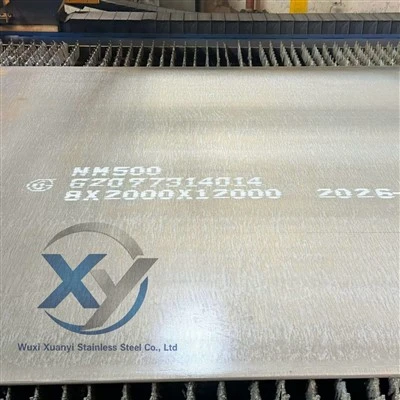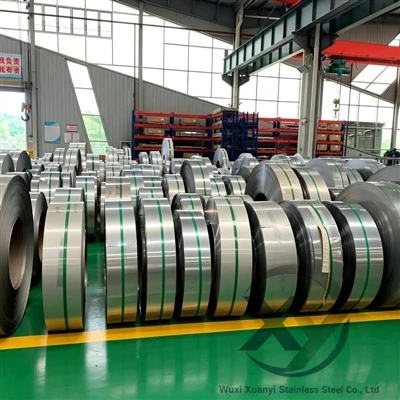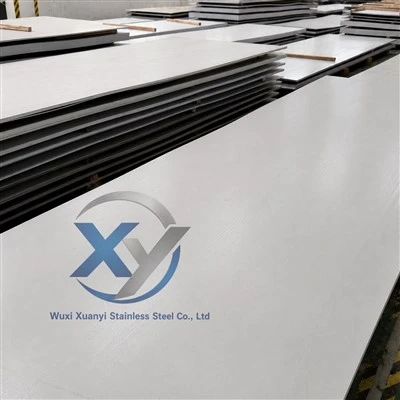


Hey everyone, it's Jake here – part of the team at your go-to hot rolled carbon steel supplier, and today I wanna chat about something I get asked all the time by folks working on everything from auto parts to construction equipment: what actually affects the magnetic properties of hot rolled carbon steel? If you're in the market for Hot Rolled Carbon Steel Sheet, Hot Rolled Carbon Steel Strip, Hot Rolled Carbon Steel Plate, or Hot Rolled Carbon Steel Coil, knowing this stuff can save you a ton of headaches down the line. I've seen so many projects go sideways because someone didn't account for how magnetic fields play with steel – trust me, this is not just a "science class" topic, it's real-world stuff.
Let's start with the basics, keep it simple. Magnetic properties of steel boil down to how easily it can be magnetized (permeability) and how strong a magnetic field it can hold (saturation), right? For hot rolled carbon steel, which is basically steel that's rolled at super high temps (above its recrystallization point) so it's cheap and versatile, those two numbers aren't fixed. They change based on a bunch of factors – some are in the chemistry, some are in how we process it at the mill, even how you handle it after delivery. I'm gonna break these down like I would over a coffee with a regular customer, no jargon overload.
First up, the big one: carbon content. I can't tell you how often this is the first question I ask when a customer says their magnetic results are off. Hot rolled carbon steel is called "carbon" for a reason – that carbon atom is tiny, and it sits in the iron crystal structure, messing with how the atoms line up. Pure iron is super magnetic, but add carbon, and it gets less magnetic. Wait, let me clarify that: not just adding carbon, but how much. If you're working with low-carbon steel (like less than 0.25% carbon), it's way more magnetic than high-carbon steel (over 0.5%). I had a customer last year making electromagnetic shielding for a small electronics setup – they ordered our low-carbon hot rolled sheet because they needed high permeability, and if they'd grabbed our medium-carbon stock by mistake, the shielding would've been garbage. High-carbon steel is harder, but its magnetic domains are distorted by all those carbon atoms, so it's way less useful for magnetic applications. That's why when you're picking out Hot Rolled Carbon Steel Sheet for a motor core vs. a structural part that doesn't need magnetism, carbon content is non-negotiable.
Next, alloying elements that aren't carbon. Carbon is the main one, but other elements in the mix change the game too. I see a lot of mills add manganese to hot rolled steel to make it stronger, but manganese – wait, no, not all alloys are bad. Silicon, for example, is sometimes added to improve electrical steel, but too much silicon can lower permeability. Then there's stuff like chromium, nickel, or copper – those are usually added for corrosion resistance, but they can mess with magnetic properties too. Chromium in particular, if you have more than like 1% in hot rolled steel, it starts making the steel more "stainless" and less magnetic. I had a client in the agricultural sector who needed steel for a plow that wouldn't rust, so we talked through our hot rolled coil with a low chromium level – enough to resist rust, but not enough to tank its magnetic properties when they had to weld it to a magnetic mounting bracket. The key here is that every alloy is a tradeoff: strength vs. magnetic performance, corrosion resistance vs. magnetism. You can't have both perfect at the same time, so you just gotta match the alloy to your exact use case.
Now, the processing stuff – this is where the hot rolled part actually matters, because hot rolling isn't just shaping, it's changing the internal structure. When we roll steel at high temps, we're breaking up the crystal grains and stretching them along the direction we're rolling. Those grains? They're the tiny, crystal-like bits that line up to make steel magnetic. If the grains are big and irregular, they're easier to line up in a magnetic field, so permeability is higher. But wait, during hot rolling, the amount of reduction (how much we squeeze the steel as we roll it) affects grain size. Too much reduction can make grains smaller, which lowers permeability. Also, cooling rate after rolling – that's a big one. When hot rolled steel cools, it forms different phases, like pearlite or ferrite. Ferrite is the magnetic phase, pearlite is less so. If we cool it slowly, more ferrite forms, which makes the steel more magnetic. If we cool it fast (like quenching), we get more martensite, which is super hard but way less magnetic. I always tell customers: if you need magnetic performance, ask us what our cooling rate is for the product you're getting. Our Hot Rolled Carbon Steel Plate for general structural use cools slower, so it's more magnetic than, say, our fast-cooled strip that's used for tooling. That's a difference you can't see with the naked eye, so don't be afraid to ask the mill for that detail.
Then there's residual stress – this is a sneaky one that so many people overlook. Residual stress is all the tension or compression locked in the steel after rolling, cutting, or welding. When you cut a piece of hot rolled steel to size with a torch or a laser, or weld it to another part, you're heating and cooling it unevenly, which leaves stress. That stress messes with the crystal structure, making it harder for magnetic domains to line up – so permeability drops, and the steel is less magnetic. I had a customer a while back making transformers; they bought our standard hot rolled sheet, cut it themselves, and the magnetic efficiency was way lower than the spec. Turned out their laser cutting was creating too much residual stress, so we had to recommend they stress-relieve the sheet before cutting (or buy pre-cut parts from our shop, which takes care of that). Welding is even worse – if you're welding hot rolled steel for a magnetic application, you gotta use the right filler metal and slow down the cooling, otherwise you'll kill the magnetism. That's a pro tip I learned from years of dealing with folks who run into this exact issue.
Grain orientation is another big one, specifically for things like Hot Rolled Carbon Steel Strip that gets used in things like transformers or motors, where the direction of the steel matters. When we roll steel, the grains get elongated along the rolling direction. So the steel is more magnetic along that length than across it. That's called "magnetic anisotropy." If you're making a motor core, you need the magnetic field to flow evenly through the core, so you have to align the strip's rolling direction with the direction the field is moving. If you get that wrong, your motor will be less efficient, use more energy, and overheat. I once had a customer who ordered our hot rolled strip without specifying orientation, so we sent them standard random-oriented strip, and they had to rework their entire core design. Lesson there: when you need consistent magnetic performance across a part, tell us exactly how you're gonna use it, not just what size you need.
Wait, let's not forget about purity – inclusions and defects. Steel has tiny impurities, like sulfur or phosphorus, that get left over from the manufacturing process. Those inclusions act like little roadblocks for magnetic domains, making it harder to magnetize the steel. High-purity hot rolled steel (with lower sulfur and phosphorus) is way more magnetic than regular steel. For example, if you're making a magnetic compass component, you need super pure steel because even a tiny inclusion would mess with the needle's alignment. Our team works hard to keep impurities low in all our hot rolled products, but if you need extra-pure stock, just ask – we can adjust our refining process to hit those specs. It's a small extra step that makes a huge difference for critical magnetic applications.
Now, I wanna tie this all together with a real example, because I know you care about what this means for your project. Let's say you're building a custom electric motor. You need steel for the stator core – that core needs high permeability (so it's easy to magnetize) and low loss (so it doesn't overheat). Here's how you pick the right hot rolled steel: first, go for low-carbon content (around 0.15% max) – that's the sweet spot for high magnetism without being too soft. Then, pick our hot rolled strip with slow cooling after rolling, so we get big ferrite grains. Specify that you need grain-aligned strip, so the rolling direction matches the stator's flux path. Also, make sure to stress-relieve the parts after cutting – no residual stress killing performance. If you skip any of these steps, your motor's gonna be less efficient, and you'll have to go back to the drawing board. That's why I always tell customers not to just buy the cheapest hot rolled steel – the cost of reworking or replacing a bad part is way higher than the small premium for steel that's tailored to your needs.
Another example: construction. Most structural steel doesn't need great magnetic properties, but wait – if you're building a crane that has magnetic lifting attachments, you need the steel for the crane arm (and the parts connecting to the magnet) to be magnetic enough to hold heavy loads. For that, you'd want our hot rolled plate with medium-carbon content, not too high, not too low. It's strong enough to hold the crane's weight, and magnetic enough that the magnet can grip it securely. If you used high-carbon steel for that, the magnet wouldn't stick as well, and you'd have safety issues. That's a case where balancing strength and magnetism is key, and knowing these factors helps you pick the right product.
Now, let's address a common myth I hear all the time: people think hot rolled steel is all the same, so magnetic properties are just a roll of the dice. Nope! We track every batch of our hot rolled products from mill to delivery, and we have specs that tell you exactly what the carbon content, grain size, cooling rate, and impurity levels are. When you order from us, you don't get a random batch – you get stock that meets your needs. Whether you need Hot Rolled Carbon Steel Sheet for electronics, coil for construction, or any other product, we can give you the data you need to verify the magnetic performance.
Here's the thing: I'm not just a sales guy, I'm someone who's been in this industry for over a decade, and I've seen so many clients make mistakes because they didn't understand how these factors affect magnetic properties. That's why I'm putting this out there – to help you make informed decisions, not just buy steel. If you're working on a project where magnetic performance matters, or you just have questions about how hot rolled carbon steel works, I want you to reach out. We can talk through your needs, look at our product specs, and make sure you get the right steel for the job. No pressure, no hard sell – just good advice from a team that cares about getting it right.
Wait, one last little note: magnetic properties can change over time too, especially if the steel is exposed to high temperatures or heavy stress. If you're working on a long-term project, make sure to test the steel after fabrication, because cutting, welding, or years of use can alter how it magnetizes. We offer testing services for our products, so if you need to confirm the magnetic properties before you install, we can help with that. It's a small step that saves a lot of trouble down the line.
At the end of the day, the magnetic properties of hot rolled carbon steel are a mix of chemistry, processing, and handling. Every factor I mentioned – carbon content, alloying elements, hot rolling reduction, cooling rate, residual stress, grain orientation, and purity – plays a part, and ignoring even one can lead to problems. When you partner with a supplier that knows these ins and outs (like us), you don't have to guess. We have all the Hot Rolled Carbon Steel Coil, sheet, strip, and plate you need, with transparent specs so you know exactly what you're getting.
If you're ready to talk about your project, need a quote, or just wanna ask more questions about how magnetic properties work for your application, our team is here. Don't hesitate to reach out – we'd love to help you get the right steel for whatever you're building. It's not just about selling metal; it's about making your project successful.
References
- Lakhtakia, A. (2006). Handbook of Magnetic Materials. Elsevier.
- Porter, D. A., Easterling, K. E., & Sherif, M. Y. (2009). Phase Transformations in Metals and Alloys. CRC Press.
- Hot Rolled Steel Processing and Properties Association. (2021). Guide to Magnetic Properties of Carbon Steel. Steel Industry Publications.
- Cullity, B. D., & Graham, C. D. (2009). Introduction to Magnetic Materials. John Wiley & Sons.