

If you've ever sat across a fabrication table from a customer who's just lost a week of production because they used the wrong stainless steel plate thickness, you'll know how important this topic is. I've been a stainless steel plates supplier for over 12 years, and one of the questions I get asked first by new buyers-whether they're a small metal fabricator making food-grade equipment or a large construction firm building a marine dock-is "What thicknesses are actually available for stainless steel plates?"
It's not a simple answer. A lot of people new to the industry think "stainless steel plate" is just one uniform product. But step into any well-stocked metal warehouse, and you'll see stacks of thin, almost foil-like sheets next to thick, heavy plates that take two people to move. The confusion comes from how the industry defines "plate" vs. "sheet" (most standards set the line at 6mm, but that can shift depending on material grade and application) and how different manufacturing processes shape which thicknesses are feasible.
Today, I'm walking through the full range of stainless steel plate thicknesses we keep in stock, why certain thicknesses work for specific jobs, and how to pick the right one so you don't end up with material that's too flimsy or overbuilt for your project. And as you read, keep in mind that all these thicknesses are available in all common stainless steel grades-304, 316, 316L, 430, and more-on our dedicated Stainless Steel Plates page.
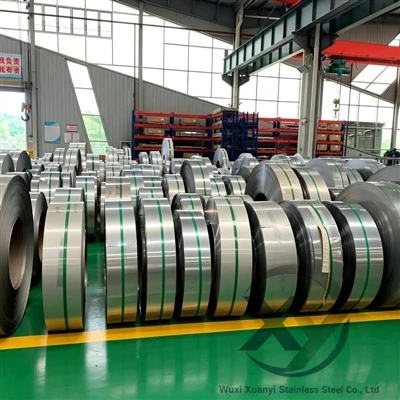
Let's start with the thinnest end of the scale. When someone asks about thin stainless steel plate, we're usually talking about gauges that fall under that 6mm line. The thinnest we regularly supply in plate form is 0.4mm, which is surprisingly light-light enough that you can crumple a small piece a little in your hand, though it won't tear. For reference, that's about the same thickness as two credit cards stacked together.
Wait, I know what you're thinking: isn't that just sheet steel? Technically, yes, but many industries use thin material for plate-level applications-like the cladding on commercial kitchen backsplashes, where you need corrosion resistance but don't need structural strength. We have customers who order 0.4mm 304 stainless steel plate for custom food processing hoppers, where the plate just needs to hold product and resist regular cleaning with harsh chemicals, not support heavy weight.
Moving up, the most common thin plate thicknesses run from 0.5mm to 3mm. This is the go-to range for small fabricators making parts like bracket covers, exhaust components, or decorative metal panels. The reason this range is so popular is that it's easy to work with-you can cut it with a basic plasma cutter or even heavy-duty shears, bend it with a press brake, and it still has enough rigidity to hold its shape once installed.
I remember a client a few years back who owned a custom outdoor furniture business. They kept ordering 1.5mm 316L stainless steel plate for their patio tables and chairs, because 316 is better at resisting salt air corrosion, and 1.5mm was thin enough to bend into those curved armrests they specialized in, but thick enough that the chairs didn't feel cheap when a customer sat down. That's the sweet spot for thin plate: it's versatile, cost-effective, and matches most small-to-medium light-duty applications.
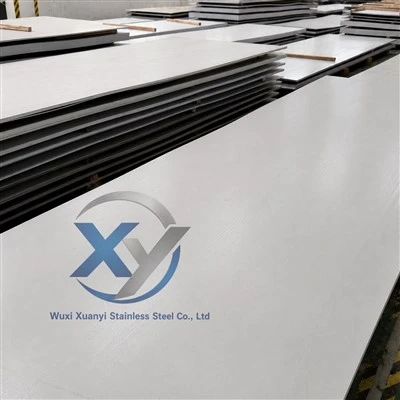
Now, once you hit 4mm, we cross into what most people would call "standard stainless steel plate." This is the thickness we ship the most of, because it's a middle ground that works for dozens of industries. 4mm and 5mm plates are used for everything from industrial equipment frames to agricultural machinery parts to the side panels of shipping containers. They're rigid enough to support weight, hold up to minor impacts, and still cut without needing specialized equipment beyond a high-powered plasma or laser cutter.
What's interesting about standard plate thicknesses is how consistent they are across different grades. Whether you're buying 304, 316, or 430, the 4mm thickness has the same dimensional tolerance-meaning if you order a 4mm 316 plate, it won't be 3.8mm and 4.2mm depending on the batch. That's critical for fabricators who are nesting multiple parts on a single sheet; if the thickness is uneven, their cuts won't line up, leading to wasted material and delayed projects.
Jump up to the next tier, and we're talking about medium stainless steel plates: 6mm to 20mm. This is where the material starts to feel like something you could build a small structure with. I once helped a marine construction firm source 12mm 316 plate for a new docking system. The 12mm thickness was perfect because it could handle the constant impact of boat hulls bumping against the dock, resist saltwater corrosion, and support the weight of moored boats, even during high tide.
This range is also where you start to see less common grades being used more often. For example, 2205 duplex stainless steel-known for its high strength and corrosion resistance-isn't really used in thin plate because its strength becomes valuable at thicker gauges. We regularly supply 10mm to 15mm 2205 plate for oil and gas pipelines, where pipes need to withstand high pressure and underground corrosion.
A lot of customers ask me why we don't have every thickness in stock. The answer is manufacturing feasibility. When you're making stainless steel plate, you start with a large slab of molten metal, roll it through a series of heavy rollers to thin it out, and cut it to size. If you try to roll a slab to 1mm, you have to go through more rollers than you would for 10mm, which increases production time and cost. Plus, thinner plate is more prone to warping during the rolling and annealing process, so it's less consistent. That's why we stick to the thicknesses that are proven to be reliable and cost-effective for our customers.
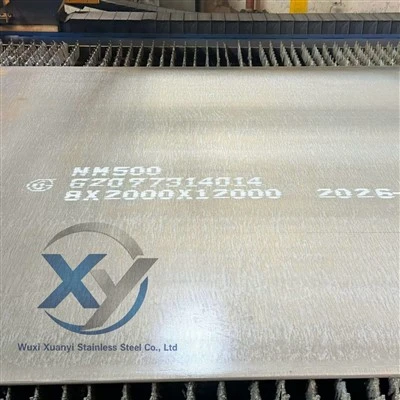
Now, the thickest end of the scale. We regularly supply plates up to 150mm, though we also offer custom rolling for even thicker material if a project calls for it. These super-thick plates are for heavy structural applications: bridge supports, heavy machinery frames, or parts for power generation equipment. Last year, a client in the energy sector ordered 80mm 304 plate for a water treatment tank. The 80mm thickness was necessary because the tank holds thousands of gallons of pressurized water, and it needs to resist corrosion from both the water and the chemicals used to treat it.
The thing about thick stainless steel plate is that it's not just about weight-it's about performance. When you're working with 50mm or thicker material, the strength is so high that you don't need additional structural supports, which saves on labor and material costs for large projects. I've seen a custom crane built with 60mm 430 plate, which is strong enough to lift 20-ton loads, and didn't require any extra bracing because of the thickness of the plate.
But here's a common mistake buyers make: assuming that thicker is always better. A few months back, a small engineering firm contacted me asking for 20mm 316 plate for a custom food processing mixer. When I looked at their plans, the mixer only needed 3mm plate to hold up to the agitation and food-grade cleaning chemicals. They'd ordered the thick plate because they thought it would be more durable, but it would have added thousands of dollars to their material cost, made the mixer heavier than necessary (which would have required a more powerful motor), and even made it harder to clean the interior of the mixer. That's why it's always best to consult with a supplier who knows the material-we can help you pick the right thickness for your specific application, not just the thickest one available.
Another point to consider is tolerances. When you order stainless steel plate, the thickness isn't exact-it's within a set range, called a tolerance. For thin plate (0.4mm to 3mm), the tolerance is usually ±0.05mm, meaning a 1.5mm plate could be 1.45mm or 1.55mm. For medium plate (4mm to 20mm), it's ±0.1mm, and for thick plate (above 20mm), it's ±0.2mm. This is important because if you're using the plate for a precision part, even a small difference in thickness can cause fit issues. We always provide tolerance certificates with every order, so you know exactly what you're getting.
Now, how do you choose the right thickness for your project? Let's break it down by common applications, based on what we've seen work over the years:
- Light-duty, low-stress applications: Think decorative panels, bracket covers, small signs. Stick to 0.4mm to 2mm plate.
- Medium-duty, general fabrication: Equipment frames, agricultural parts, furniture. Go with 2mm to 6mm plate.
- Heavy-duty, structural applications: Docks, pipelines, machinery frames, storage tanks. Use 6mm to 150mm plate, depending on the load.
- Corrosive environments: Saltwater, chemicals, outdoor exposure. For thin applications, use 1.5mm to 3mm 316 or 316L; for heavy structural, use 10mm to 50mm 316 or duplex 2205.
Of course, every project is different, so if you're not sure, the best thing to do is reach out. We're not just a supplier of raw material-we help customers problem-solve. For example, a client last year was making custom solar panel mounts for a coastal area, where salt air is a big issue. They thought they needed 6mm plate, but after talking through their plans, we suggested 3mm 316L plate, which was thin enough to bend into the custom mount shape, corrosion-resistant enough for the salt air, and cost-effective enough to fit their budget.
And to make it even easier for you to browse all the thicknesses we offer, we've organized our entire inventory on our Stainless Steel Plates page, where you can filter by thickness, grade, and finish to find exactly what you need.
I'll be honest: the stainless steel plate market can be overwhelming, especially if you're new to a project that requires precise material specifications. The thickness isn't just a number on a spec sheet-it impacts cost, performance, ease of fabrication, and even the lifespan of your final product. Over my years in this business, I've seen clients make costly mistakes by guessing at thickness, and I've seen projects go smoothly because they worked with a supplier who knew their stuff.
If you're currently working on a project and not sure which stainless steel plate thickness is right for you, don't hesitate to reach out. Whether you need a small order for a custom part or a bulk shipment for a large construction job, we can help you select the perfect material for your needs, with the right thickness, grade, and finish.
References
- ASTM International. (2022). Standard Specification for Stainless Steel Plates, Sheets, and Strip. ASTM A240/A240M – 22.
- Metal Suppliers Industry Association. (2021). Stainless Steel Plate Thickness and Tolerance Standards. MSIA Technical Bulletin 107.
- Korin, H. (2020). Selection Guidelines for Stainless Steel Plates in Industrial Applications. Journal of Metal Fabrication, 18(3), 45–52.
- Outokumpu. (2023). Stainless Steel Plate Product Guide: Thickness Ranges and Applications. Outokumpu Global Technical Documentation.
- American Iron and Steel Institute. (2022). Corrosion Resistance of Stainless Steel Plates by Thickness and Grade. AISI Steel Line Report 12–02.