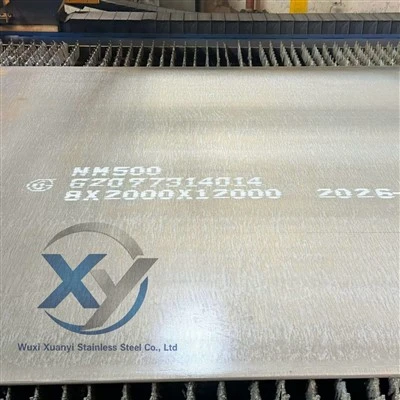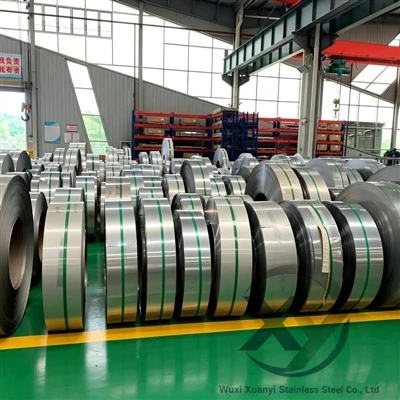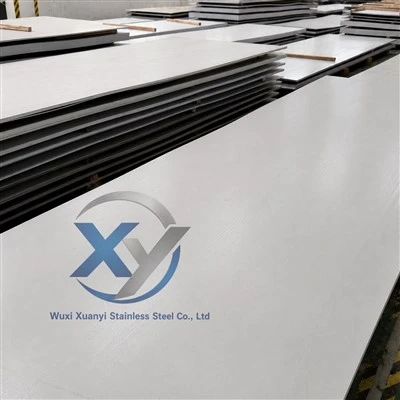


Hey folks, let's cut to the chase-if you're in the market for stainless steel plates, chances are you've heard the word "ductility" thrown around a lot, but what does it actually mean for your projects? As a supplier who's been talking to fabricators, builders, and manufacturers every single day, I get it: technical terms can feel like a foreign language, but understanding ductility is non-negotiable if you're picking the right material. Today, I'm breaking this down simply, no jargon overload, and how it ties directly to the Stainless Steel Plates we carry for all your needs.
First off, let's define ductility in plain terms. Ductility is a material's ability to stretch, bend, or deform without cracking or breaking-like how a rubber band can pull longer before it snaps, versus a glass rod that shatters if you even nudge it. For stainless steel plates specifically, that's a big deal. If you're working on a project that involves shaping, forming, or even rolling the plate into a curve (think kitchen equipment parts, architectural facades, or custom industrial tanks), you need a plate that can flex with the process, not fail mid-job.
Now, not all stainless steel plates have the same ductility, and that's where the grade comes in. Let's keep it to the most common ones we supply at our shop because that's what matters to you. The 304 grade is the workhorse of stainless steel, right? It's the one you'll see in everything from food processing equipment to outdoor railings. Here's the thing: 304 stainless steel plates have some of the best ductility in the austenitic family-we're talking about being able to bend it into tight curves, deep draw it into pots or pans, even stretch it slightly for custom parts without splitting. That's why it's the go-to for fabricators who need versatility. Then there's 316 grade, which is similar but with molybdenum added for corrosion resistance in saltwater or harsh chemicals. It's a touch less ductile than 304, but still way more flexible than most other metals-great for marine applications or chemical processing where corrosion is a risk.
Wait, but what about the other side of the coin? Martensitic grades, like 410, are harder, more magnetic, and have way lower ductility. You can't deep draw a 410 plate-you'd crack it immediately. These are for things like knife blades or bolts where hardness matters more than flexibility, so they're way less common for projects that need forming. That's why when you're browsing Stainless Steel Plates on our site, you'll notice we clearly list each grade's key properties, including ductility metrics, because we don't want anyone buying the wrong plate for their job.
Let's talk about what ductility looks like in action for stainless steel plates. Last month, a local custom sign shop came to us with a problem. They wanted to make large, curved metal letters for a downtown storefront, but their previous supplier's stainless steel plate kept cracking when they tried to bend it around a large radius. We sent them 304 stainless steel plates, and their shop was stoked-they were able to shape the letters perfectly without a single crack. That's ductility working for you. Another example: a food processing plant needed deep-drawn tanks, so we recommended 304 plates too. The team there told us they formed the tanks in one go, no rejects, because the plate stretched just enough to match their design. On the flip side, we had a customer who tried to use 410 plates for a curved pool railing-total disaster, the plate split halfway through bending. That's why matching the grade's ductility to your process is make or break.
Now, here's a pro tip from our team: ductility doesn't just depend on the grade, it also depends on how the plate was made. Hot-rolled vs. cold-rolled plates-big difference here. Cold-rolled stainless steel plates are work-hardened during manufacturing, which makes them harder and less ductile. You can still bend them, but not as much as their hot-rolled counterparts. Hot-rolled plates have a softer, more uniform structure, so they're more ductile, better for heavy forming work. That's why when you check out Stainless Steel Plates, we label each as hot-rolled or cold-rolled, so you know exactly what you're getting. If you need to form a tight curve, hot-rolled is usually your bet; if you need a smooth, flat finish with less flexibility, cold-rolled works.
Wait, can ductility change over time? Sort of, but not in a bad way-for stainless steel, at least. Some materials get brittle as they age, but stainless steel's corrosion resistance keeps its structure intact, so ductility stays consistent for decades, as long as you don't subject it to extreme heat. If you're welding stainless steel plates, that can affect ductility too. The heat from welding creates a heat-affected zone (HAZ) that's slightly less ductile than the original plate. That's why our team always recommends prepping the right grade and using the correct welding techniques to minimize that impact-little tricks that save you from wasted material and messed-up projects. We even offer free pre-sale guidance on this, so you don't have to guess.
Let's get into numbers a bit, just to back this up (no fancy math, promise). Ductility is usually measured by elongation percentage-how much a metal can stretch before breaking. For 304 hot-rolled stainless steel plates, elongation is around 40%-meaning it can stretch 40% of its original length without cracking. That's insane flexibility. Cold-rolled 304 is around 20% elongation, still solid. 316 hot-rolled is around 35%, so almost as good as 304. 410? Only about 20% max, and that drops a lot after heat treatment, which lines up with what I told you earlier-way less flexible. These numbers aren't just random; they're tested in our warehouse when we receive shipments, so we know every plate we send meets those standards.
Now, why does this matter for your bottom line? If you buy a stainless steel plate with too little ductility for your project, you're looking at wasted material, rework, delayed deadlines, and extra costs. We've seen customers come to us after blowing their budget on plates that weren't right for their job, and it's avoidable. When you source your Stainless Steel Plates from us, we make it easy to pick the right one-whether you're a small hobbyist doing a backyard project, a fabricator with a big commercial job, or a maintenance manager replacing equipment parts. We've got all grades, all finishes, and we'll answer all your questions, no sales pitch pressure.
I also want to clear up a common misconception: some people think "stainless steel is stainless, so all plates are the same." Nope. Ductility is one of the biggest differentiators between grades, and it's exactly what makes 304 the most popular-because it balances ductility, corrosion resistance, and cost. If you needed super high ductility for extreme forming, there are even specialty austenitic grades with up to 50% elongation, but those are overkill for most jobs. We only carry what's actually useful for our customers, so you won't find a bunch of random grades that you don't need.
Let's wrap this up. Ductility of stainless steel plates is just how much they can deform without breaking, and it's determined by the grade, manufacturing process, and even how you treat the plate later (like welding). For most projects that involve forming, bending, or shaping, 304 or 316 hot-rolled plates from a trusted supplier will give you the flexibility you need. And if you're still not sure which plate is right for your specific project, don't overthink it-reach out to our team directly. We're not here to push the most expensive plate; we're here to make sure you get the right one, on time, on budget.
If you're ready to order stainless steel plates, or just want to ask a quick question about ductility, feel free to connect with our procurement team to discuss your needs. We're here to help you choose the perfect stainless steel plate for every job.
References
- ASM International. (2008). Stainless Steel Plates: Properties and Selection. Materials Park, OH: ASM International.
- The World Steel Association. (2021). Ductility in Stainless Steel: Fundamentals and Applications. Brussels: World Steel Association.
- Stainless Steel Industry Technical Report. (2022). Grade-Dependent Ductility and Fabrication Guidelines. International Stainless Steel Forum.