

Hey everyone, I'm Jake, and I've been running a carbon steel bar supply business for over 12 years now. If you've ever worked with steel parts-whether for construction, automotive, manufacturing, or even DIY projects-you know that not all carbon steel bars are created equal. Last month, I had a customer send back a batch of straight bars because they were cracking during bending, and when we broke down the issue, it all traced back to the raw materials we started with. That's when I realized I should pull back the curtain on something we deal with every day: how the quality of raw materials actually shapes the final carbon steel bar. This isn't just industry jargon-this is the stuff that makes or breaks a project, and I want to break it down like I would for a new apprentice on the shop floor.
First off, let's get one thing straight: carbon steel is all about iron plus a little carbon (usually 0.05% to 2.0% by weight), but that tiny carbon percentage is just the start. The raw materials we feed into our mills-scrap iron, pig iron, ferroalloys, even the small amounts of impurities we try to remove-set the entire tone for the bar's strength, ductility, toughness, and even how it handles welding or heat treatment. I've seen cheap, low-grade raw materials turn a supposed "high-quality" carbon steel straight bar into something that snaps like a dry twig, and I've worked with premium scrap that makes our best coil bars perform way above spec. Let's dive into the specifics.
First up: iron source. Most of our raw iron comes from two places-pig iron (made from iron ore in a blast furnace) and post-consumer steel scrap. Pig iron has higher carbon and silicon content, but it's got fewer of the weird, unpredictable impurities you find in scrap. Wait, let's talk scrap because that's where a lot of problems hide. If you're buying scrap that's been mixed with steel from old construction that has leftover copper or tin (from soldering or coatings), that's a ticking time bomb. Copper, for example, causes "hot shortness"-meaning the steel cracks when it's being rolled at high temperatures, which is exactly what we do when we form bars into their final shapes. A few years back, a competitor of mine used scrap from old car bodies that had too much copper, and their entire batch of carbon steel square bars came out with surface cracks before we even finished finishing. We now test every single scrap load for tramp elements (that's our name for the random stuff that shouldn't be there) before we even melt it down, and that's why our stuff holds up. Pig iron is more consistent, but it's also more expensive, so we balance it with high-quality, sorted scrap to keep prices fair without cutting corners.
Next, the carbon content and consistency. Carbon is the main alloying element in carbon steel, right? But if the raw materials lead to uneven carbon distribution, that's a big problem. Like, if one part of the molten steel has 0.15% carbon and another has 0.25%, when we roll that into a carbon steel channel or a flat bar, the low-carbon area will be soft and stretchy, while the high-carbon area will be hard but brittle. Last year, a customer ordered coil bars for a conveyor system, and their team noticed some coils were stiffer than others. Turns out, our melt batch had a small carbon fluctuation because we had a scrap load with leftover high-carbon tool steel in it-we missed it during sorting. That taught us to use spectrometers to test every melt's carbon content before casting, so we can adjust and make sure it's within 0.02% of our target. For different products, we target different carbon levels: straight bars for structural support need medium carbon (0.2% to 0.5%) for strength, while coil bars for spring applications need higher carbon for that elasticity. If the raw material doesn't give us that consistent carbon, we can't make the product our clients need.
Then there's impurities-we're talking sulfur and phosphorus, the two biggest bad guys in raw materials. Sulfur makes steel "hot short," like I mentioned earlier, and phosphorus makes it "cold short," meaning it cracks when it's cold (like when you bend it on-site in winter). The maximum spec we aim for is 0.05% sulfur and 0.04% phosphorus, but we usually get them way lower-0.02% sulfur and 0.01% phosphorus-because we take the time to refine the molten steel with calcium treatments and vacuum degassing. If we skipped that step, and our raw materials had higher sulfur, our carbon steel straight bars would snap during construction when workers are bending them on cold days. I've seen this first-hand: a small shop nearby didn't invest in refining equipment, so their bars had 0.07% sulfur, and a winter storm caused a temporary warehouse structure made with their bars to collapse. That's not just a quality issue-it's a safety one. The raw materials' initial impurity levels are non-negotiable for us; we won't take a scrap load that has too much of these two, no matter how cheap it is.
Wait, let's talk about microinclusions, too. Those are tiny particles of stuff like alumina or silicate that get trapped in the molten steel during melting. If they come from raw materials-like leftover furnace lining or even dirt in the scrap-they end up in the final bar, acting like little stress raisers. When the bar is under load, those inclusions create tiny cracks that grow over time, leading to premature failure. A client in the automotive industry uses our carbon steel square bars for engine parts, and they do fatigue testing. If our bars had too many microinclusions, their test would fail, and they'd stop ordering. That's why we use argon oxygen decarburization (AOD) to remove those inclusions from the raw melt, so our final bars have less than 10 inclusions per square millimeter. It's extra work, but our repeat customers know they can count on that consistency.
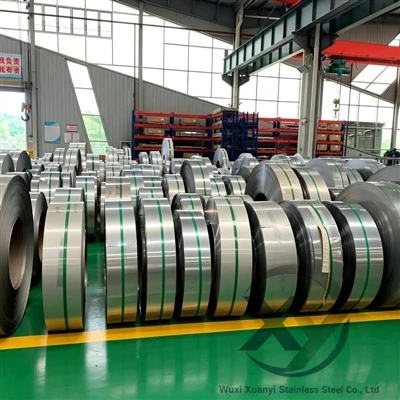
Now, let's connect this to the actual products we supply, because I know you guys care about what you're ordering. Take our carbon steel bar in coil, which is super popular for fencing, wire mesh, and spring applications. The raw materials here need to be extra consistent because coil bars are drawn into thin wires and bent multiple times. If there's a spot with higher carbon or more inclusions, the wire will snap during drawing, costing our customer time and money. We use low-sulfur, low-phosphorus scrap for coil melts, and that's why our coils have a 99.8% pass rate during drawing tests-something our competitors can't touch because they cut corners on raw material quality.
Then there's our carbon steel straight bar, which goes into construction, machinery, and general fabrication. These bars need to have good tensile strength and yield strength, so the raw material's carbon level and purity are make-or-break. Last month's return I mentioned earlier? That was a straight bar batch where a supplier sent us low-grade pig iron with too much silicon. The silicon messed up the grain structure of the steel during rolling, so the bars were brittle. We had to eat the cost of the return, but that's a lesson learned: we now audit every single raw material supplier at least twice a year to make sure their materials meet our specs. If a supplier's raw materials slip, we drop 'em-no questions asked.
Our carbon steel square bar is used for axles, brackets, and structural supports, so it needs good impact resistance, especially in outdoor or heavy-load applications. The raw material here needs to have controlled manganese levels too-manganese helps reduce sulfur's negative effects and improves hardenability. If our raw material doesn't have enough manganese, the square bar will crack under impact. We add manganese ferroalloy to our melts, but if the initial raw material already has inconsistent manganese, we can only do so much. That's why we source manganese from trusted mines that test their ore for consistency, so our melt additions are accurate.
Even our less common products, like carbon steel channel and carbon steel flat bar, depend on raw material quality. The channel is used for structural framing, so it needs uniform thickness and strength along its entire length. If the raw material has inconsistent carbon, one side of the channel will be weaker than the other, leading to warping when it's cut or welded. The flat bar is used for floor plates, trim, and general machining, so it needs to machine cleanly without leaving rough edges. If there are microinclusions from bad raw materials, the machining process will cause burrs and uneven surfaces, which our customers hate.
Wait, I should also mention grain structure-this is something that's directly influenced by raw material purity and composition. When we roll the bar, the molten steel's grain structure is shaped by the elements in the raw materials. If there are tramp elements, the grains become uneven, leading to a bar that's weaker in certain directions. For example, a bar with coarse grains will have lower toughness, while fine, uniform grains give better strength and ductility. We use raw materials that promote fine grain formation, like low levels of nitrogen (another impurity we watch closely) and niobium as a microalloy, which we add to the melt. But if the raw material has too much nitrogen from contaminated scrap, we can't get that fine grain structure, so the bar's toughness drops. We test grain size on every batch- it's an extra step, but it's how we know our bars will perform when our customers need them to.
Let's be real, I know some buyers out there are focused on the lowest price, and they think all carbon steel bars are the same. But here's the thing: cutting corners on raw materials might save you a few bucks upfront, but it'll cost you in the long run-with returns, downtime, safety issues, or even lawsuits. A construction project using cheap bars that crack during installation? That's a safety hazard for workers, and it'll delay the whole project, costing way more than the extra you paid for quality bars.
At the end of the day, our job isn't just to sell you a carbon steel bar-it's to make sure that bar works for your project, no matter what you're using it for. Whether you need carbon steel bar in coil for a custom spring, carbon steel square bar for an agricultural axle, carbon steel straight bar for a bridge beam, carbon steel channel for a warehouse frame, or carbon steel flat bar for machine parts, we start with raw materials that we test, audit, and refine to meet the highest standards. We don't cut corners on the stuff that matters, because we've seen what happens when you do.
If you're working on a project right now and you need reliable carbon steel bars, whether for small jobs or large-scale builds, we'd love to hear from you. We can walk you through our raw material testing process, show you our quality records, and help you pick the right product for your needs. Don't settle for bars that might let you down-reach out, and let's make sure your project uses steel you can count on.
References
- ASTM A108/A108M-21, Standard Specification for Carbon Steel Bars, Cold-Finished. ASTM International, West Conshohocken, PA, 2021.
- Nakajima, H. (2000). The Physical Metallurgy of Carbon Steels. Japan Society for Technology of Plasticity, Tokyo, Japan.
- World Steel Association. (2019). Raw Materials for Steelmaking: Quality, Availability, and Sustainability. Brussels, Belgium.
- Davis, J. R. (Ed.). (1998). Carbon Steels: Processing, Structure, and Performance. ASM International, Materials Park, OH.