
As a supplier of Hot Rolled Stainless Steel Coils, I've witnessed firsthand the diverse needs and inquiries from our clients. One common question that frequently arises is about the difference in performance between hot rolled stainless steel coils of different thicknesses. In this blog post, I'll delve into this topic, sharing my insights based on years of experience in the industry.
Understanding Hot Rolled Stainless Steel Coils
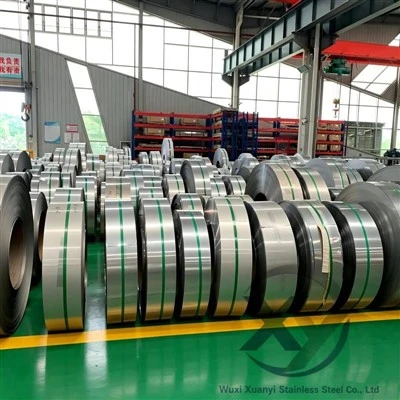
Before we explore the impact of thickness on performance, let's briefly understand what hot rolled stainless steel coils are. Hot Rolled Stainless Steel Coils are produced by heating stainless steel slabs above their recrystallization temperature and then passing them through rollers to achieve the desired thickness and shape. This process makes the steel more malleable and allows for large-scale production. These coils are widely used in various industries, including automotive, construction, and manufacturing, due to their corrosion resistance, strength, and durability.
Performance Differences Based on Thickness
Mechanical Strength
One of the most significant differences in performance is related to mechanical strength. Thicker hot rolled stainless steel coils generally exhibit higher mechanical strength. The increased thickness provides more material to resist external forces, whether it's tension, compression, or bending. For example, in structural applications in construction, thicker coils can support heavier loads without deforming. A 10mm thick hot rolled stainless steel coil will have a much higher load-bearing capacity compared to a 3mm thick coil. This makes thicker coils ideal for applications where strength is a critical factor, such as in the construction of bridges or high-rise buildings.
On the other hand, thinner coils are more flexible and can be bent or formed more easily. In industries like automotive manufacturing, where complex shapes are required for parts such as exhaust systems or body panels, thinner Hot Rolled Stainless Steel Strip Coil are preferred. They can be manipulated into the desired shapes without cracking or breaking, which would be more likely to occur with thicker coils.
Corrosion Resistance
Corrosion resistance is another important aspect affected by the thickness of the hot rolled stainless steel coils. Thicker coils generally offer better long-term corrosion resistance. The additional material provides a greater barrier against corrosive agents, such as moisture, chemicals, and saltwater. In marine applications, where the steel is constantly exposed to harsh saltwater environments, thicker coils are often used to ensure the longevity of the structure. For instance, a 6mm thick coil used in a marine railing will have a longer service life compared to a 2mm thick coil, as it will take longer for the corrosive agents to penetrate through the material.
However, thinner coils can still provide adequate corrosion resistance if properly coated or treated. Many manufacturers apply anti-corrosion coatings to thinner coils, which can significantly enhance their resistance to rust and corrosion. In indoor applications where the exposure to corrosive elements is limited, thinner coils with appropriate coatings can be a cost-effective solution.
Thermal Conductivity
Thermal conductivity is also influenced by the thickness of the hot rolled stainless steel coils. Thicker coils have a lower thermal conductivity compared to thinner coils. This means that they are better at insulating and reducing heat transfer. In applications where heat insulation is required, such as in the construction of industrial ovens or refrigeration units, thicker coils are more suitable. The reduced heat transfer helps to maintain a stable temperature inside the equipment, improving its energy efficiency.
Thinner coils, on the other hand, have a higher thermal conductivity. This makes them useful in applications where quick heat transfer is desired, such as in heat exchangers. In a heat exchanger, the thin stainless steel coils can efficiently transfer heat from one fluid to another, maximizing the heat exchange process.
Weldability
Weldability is an important consideration in many manufacturing processes. Thinner hot rolled stainless steel coils are generally easier to weld compared to thicker coils. The lower thickness means that less heat is required to melt the material during the welding process, reducing the risk of distortion and cracking. In industries such as furniture manufacturing or small-scale metal fabrication, where welding is a common operation, thinner coils are often preferred for their ease of welding.
However, thicker coils also have their place in welding applications. In heavy-duty construction or large-scale manufacturing, where strong and reliable welds are required to withstand high loads, thicker coils are used. Special welding techniques and equipment may be needed to ensure proper fusion and strength of the welds in thicker coils.
Choosing the Right Thickness for Your Application
Selecting the appropriate thickness of hot rolled stainless steel coils depends on several factors. First, you need to consider the specific requirements of your application. If strength and load-bearing capacity are crucial, thicker coils are the way to go. For applications where flexibility and ease of forming are important, thinner coils will be more suitable.
Cost is another important factor. Thicker coils generally cost more due to the increased amount of material used. You need to balance the performance requirements with your budget. In some cases, a slightly thinner coil with appropriate coatings or treatments may provide a cost-effective solution without sacrificing too much performance.
Finally, you should also consider the availability of the coils. Some thicknesses may be more readily available than others, which can affect your production schedule. As a supplier, we can provide you with information on the availability of different thicknesses and help you make the best decision for your project.
Contact Us for Your Hot Rolled Stainless Steel Coil Needs
If you're in the market for hot rolled stainless steel coils, we're here to help. With our extensive experience and a wide range of products, we can provide you with the right coils for your application. Whether you need thick coils for heavy-duty construction or thin coils for precision manufacturing, we have the expertise and resources to meet your needs.
Don't hesitate to contact us to discuss your requirements. We can offer technical advice, provide samples, and give you a competitive quote. Let's work together to find the perfect hot rolled stainless steel coils for your project.
References
- Smith, J. (2020). Stainless Steel Handbook. Industrial Press.
- Johnson, A. (2019). Hot Rolling Processes and Their Impact on Steel Properties. Journal of Metallurgy, 15(2), 45-56.
- Brown, C. (2018). Corrosion Resistance of Stainless Steel in Different Environments. Materials Science Review, 22(3), 78-90.