

What is the difference between hot rolled stainless steel coil and stainless steel plate?
In the realm of stainless steel products, two common forms that often come into the spotlight are hot rolled stainless steel coils and stainless steel plates. As a supplier of hot rolled stainless steel coils, I am frequently asked about the distinctions between these two products.
Understanding these differences is crucial for customers, whether they are involved in construction, manufacturing, or other industries that rely on stainless steel materials. In this blog, I will delve into the key differences between hot rolled stainless steel coils and stainless steel plates across various aspects such as production process, appearance, mechanical properties, and applications.
Production Process
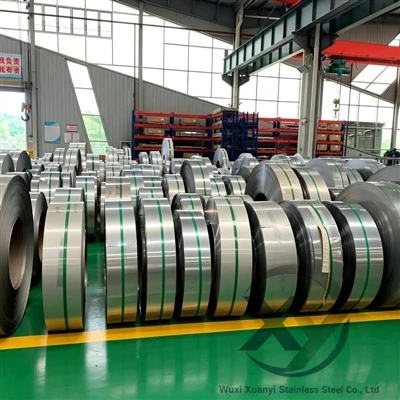
The production process is where the divergence between hot rolled stainless steel coils and stainless steel plates begins. Hot rolled stainless steel coils are formed through a hot rolling process. First, a stainless - steel billet is heated to a high temperature, typically above the recrystallization temperature. This makes the steel more malleable. The heated billet then passes through a series of rolling mills, where it is gradually reduced in thickness and elongated. The continuous rolling process results in a long strip of stainless steel, which is then coiled up for easy storage and transportation. For more information about hot rolled stainless steel coils, you can visit Hot Rolled Stainless Steel Coils.
On the other hand, stainless steel plates can be produced from hot rolled coils or directly from billets. If they are made from hot rolled coils, the coils are first uncoiled and then cut into specified lengths and widths. When produced directly from billets, the billets are also hot - rolled, but the rolling process is adjusted to achieve the desired plate dimensions. This plate - making process requires more precise control of the dimensions and flatness compared to the coil production.
Appearance
The appearance of hot rolled stainless steel coils and stainless steel plates shows obvious differences. Hot rolled stainless steel coils usually have a scaly surface finish. During the hot - rolling process, an oxide layer forms on the surface of the steel due to the high temperature and contact with the air. This oxide layer gives the coil a rough and somewhat uneven appearance. However, this surface can be further processed, such as pickling or grinding, to improve its smoothness and appearance. You can explore different types of hot rolled stainless steel strip coils at Hot Rolled Stainless Steel Strip Coil.
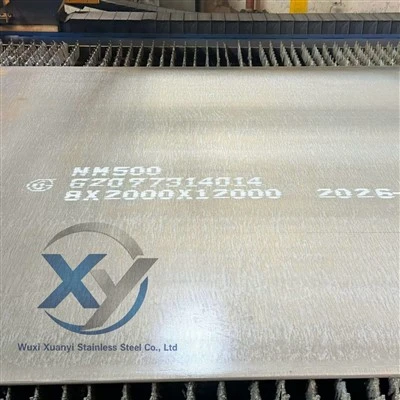
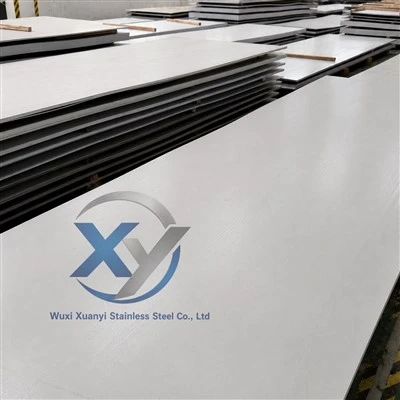
Stainless steel plates, on the other hand, generally have a more uniform and flat surface. Since the plates are often used in applications where appearance matters, such as architectural facades or decorative elements, more attention is paid to their surface quality during production. They may undergo additional finishing processes like polishing, which can result in a mirror - like or satin - like finish, depending on the customer's requirements.
Mechanical Properties
The mechanical properties of hot rolled stainless steel coils and stainless steel plates also vary. Hot rolled stainless steel coils tend to have better ductility. The continuous rolling process in coil production aligns the steel grains in a certain direction, which gives the coil good flexibility. This makes it suitable for applications that require the material to be formed or bent, such as in the manufacturing of pipes or tubes. The coiled form also allows for a continuous supply of material during the forming process, reducing production interruptions.
Stainless steel plates, in contrast, often have higher strength in the thickness direction. The production process of plates can be optimized to ensure better performance in applications where high - stress resistance is needed, such as in structural parts of buildings or heavy - duty machinery. The flat shape of the plate also provides a stable surface for load - bearing applications.
Applications
The differences in production process, appearance, and mechanical properties lead to different application scenarios for hot rolled stainless steel coils and stainless steel plates.
Hot rolled stainless steel coils are widely used in industries that require large - scale and continuous production. In the automotive industry, they are used to manufacture car body components, exhaust pipes, and other parts. The coil's flexibility and continuous supply make it easy to integrate into high - speed production lines. In the construction industry, hot rolled stainless steel coils can be used to make roofing materials, wall cladding, and reinforcement meshes. Additionally, in the manufacturing of household appliances, such as washing machines and refrigerators, coils are often used for their formability.
Stainless steel plates are commonly used in applications where surface finish and high strength are of primary importance. In the architecture field, they are used for building facades, interior decoration elements like elevator cabins, and handrails. The aesthetic appearance of the plates enhances the visual appeal of the buildings. In the shipbuilding industry, stainless steel plates are used for making hulls, decks, and structural components due to their high strength and corrosion resistance. In the food processing and pharmaceutical industries, the smooth and cleanable surface of stainless steel plates makes them ideal for equipment such as tanks, conveyor belts, and workbenches.
Cost Considerations
Another aspect affected by the differences between hot rolled stainless steel coils and stainless steel plates is the cost. Generally, hot rolled stainless steel coils are more cost - effective in large - volume production. The continuous production process of coils reduces manufacturing costs, and the coiled form is more space - efficient during storage and transportation, which further lowers the overall cost.
Stainless steel plates, on the other hand, may be more expensive. The additional processing steps required to achieve the desired dimensions, flatness, and surface finish increase the production cost. However, the higher cost is often justified by their specific applications where high - quality appearance and performance are essential.
Conclusion
In conclusion, hot rolled stainless steel coils and stainless steel plates have distinct differences in production process, appearance, mechanical properties, applications, and cost. As a supplier of hot rolled stainless steel coils, I understand the unique advantages of each product and can help customers choose the most suitable material for their projects. Whether you need a flexible and cost - effective solution for large - scale production or a high - quality material with excellent surface finish and strength, we have the expertise to assist you.
If you are interested in our hot rolled stainless steel coils or have any questions about the selection of stainless steel products, please feel free to contact us for a detailed discussion. Our team of experts will be happy to provide you with professional advice and customize solutions according to your specific requirements.
References
- "Stainless Steel Handbook" by Davis, J. R.
- Publications from the American Iron and Steel Institute.
- Industry - specific articles on stainless steel manufacturing and applications from professional journals.