

Hey there! If you're in the market for cold rolled carbon steel (CRCS), you've probably heard the term "pass schedule" thrown around by manufacturers or suppliers like us. Let's break down what that actually means, why it matters, and how we nail it as a CRCS supplier to deliver the quality products you need-whether that's coils, strips, or sheets.
First off, let's get on the same page: cold rolling isn't just "rolling steel when it's cold." It's reducing the thickness of hot rolled carbon steel at room temperature, which gives it that tight dimensional control, smoother surface, and higher strength you can't get from hot rolling. The pass schedule is basically the step-by-step plan for how you do that reduction-like, how many passes you make, how much thickness you take off each time, and the tension, speed, and roll settings for every single pass. Mess up the pass schedule, and you end up with steel that's uneven, too brittle, or has surface defects that make it useless for things like automotive parts, appliances, or construction components.
So, why is this schedule such a big deal for carbon steel specifically? Carbon steel has that perfect mix of strength and ductility, but too much reduction in one go can cause it to work-harden too fast-like bending a paper clip back and forth until it snaps. If you try to cut 0.1 inches off a 0.2-inch thick slab in a single pass, that's way too much; the steel will crack, or the rolls will get damaged, or you'll end up with wavy edges. Our pass schedule avoids all that by taking it slow and steady, balancing how much we reduce thickness with keeping the steel formable and free of defects.
Let's walk through how we build a solid pass schedule for carbon steel, from our starting hot rolled coil to the finished product. First, we start with the base material: hot rolled carbon steel coil, usually with a thickness between 1.5mm and 12mm. That's our input, and its chemistry (carbon content, manganese, sulfur, etc.) is non-negotiable here. For low-carbon steel (the most common stuff for general use), carbon is usually under 0.25%-this is way more formable than high-carbon, so we can take slightly bigger reductions per pass, but we still have to stick to a rule of thumb we've learned over years: max 25-30% thickness reduction per pass for low-carbon steel. For medium-carbon (0.25-0.55%), we drop that to 20-25% because it's less ductile, and high-carbon? We keep it under 15%-you have to baby that stuff or it'll crack before you even get close to the finished thickness.
Next, we figure out the total reduction we need. If the customer wants a finished thickness of 0.8mm and our starting coil is 3.0mm, that's a total reduction of 73%-so how do we split that into passes? Let's do the math: first pass, 3.0mm → 2.2mm (27% reduction, perfect for low-carbon). Second pass, 2.2mm → 1.6mm (27% again, still safe). Third pass, 1.6mm → 1.1mm (31%-wait, that's a touch over, but because the steel is getting work-hardened a little each pass, we bump up the tension here to stretch it evenly without cracking). Fourth pass, 1.1mm → 0.8mm (27% reduction, and we slow down the rolling speed a tiny bit here to control surface finish). That's four passes total-simple, but effective. We don't just pick numbers out of thin air; we test this on a small batch first if it's a new grade, then adjust before we run the full order.
Tension is another huge part of the pass schedule that people don't talk about enough. We run tension between the payoff reel (where the starting coil comes from) and the first stand, between each pair of rolls, and between the last stand and the take-up reel (where the finished coil goes). For carbon steel, too little tension and the strip will wrinkle-like a bedsheet that's not pulled tight. Too much tension, and it'll stretch too much, making it thinner than planned or even breaking mid-roll. We adjust tension based on the pass: earlier passes (thicker steel) need higher tension to keep the strip flat, later passes (thinner) need a little less so we don't over-stretch it. We also watch the tension gauges like a hawk-if it spikes even 10% above our set point, we slow the line down until we fix it.
Roll settings matter too. The work rolls (the ones that actually touch the steel) for carbon steel are usually made of high-chrome or forged steel, hard enough to not wear down too fast, but we have to grind them to a smooth finish that matches what the customer wants. If someone orders a bright cold rolled carbon steel sheet, we grind the work rolls to a mirror-like polish; if they want a matte finish, we use a slightly rougher grind. We also adjust the roll gap for each pass-wait, no, actually, the roll gap is set based on the target thickness for that pass, but we account for roll deflection (the rolls bend a tiny bit under pressure) so we set the gap a hair smaller than the target to compensate. For carbon steel, since it's more rigid than, say, aluminum, we don't have to compensate as much, but it's still something we check every shift.
Speed is another variable we tweak in the pass schedule. We start the first pass slow-like 100 meters per minute-so we can get the tension and roll settings right, then bump up speed as we go. Later passes can go faster, since the steel is thinner and easier to shape, but we don't push it too hard. If we run a thin carbon steel strip at 500 meters per minute, the friction between the steel and the rolls can cause heat buildup, which makes the steel work-harden unevenly, leading to edge cracking or surface scuffs. We also add a tiny bit of lubricant (usually a water-based emulsion) to the rolls for carbon steel-this reduces friction, keeps the temperature down, and improves the surface finish. Too much lubricant, and it leaves a residue that we have to clean off later; too little, and we get scratches. Finding that sweet spot is part of the pass schedule art.
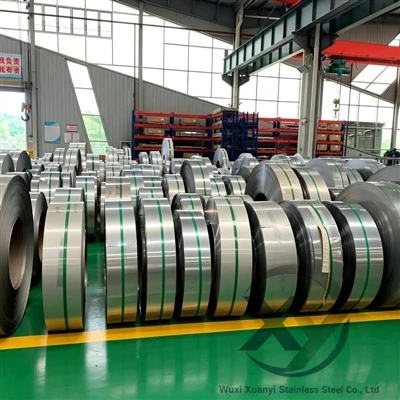
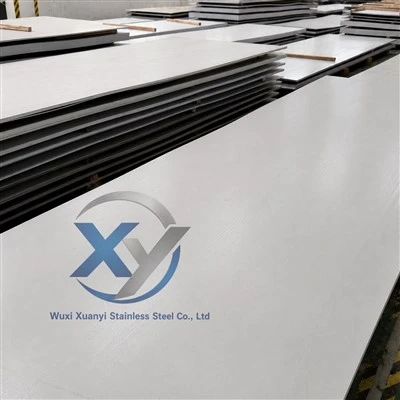
Now, you might be wondering: does this pass schedule change for different CRCS products? Absolutely. If we're making a Cold Rolled Carbon Steel Coil, we need the edges to be perfectly straight so it can be cut into strips or sheets later-so our last pass has a slight "edge crown" on the rolls, which helps prevent edge wave. For a Cold Rolled Carbon Steel Strip, which is usually narrower than a coil, we use narrower work rolls and adjust the lateral tension to keep the strip from drifting off-center. And for Cold Rolled Carbon Steel Sheet, which is cut to precise dimensions, we make sure the final pass has super tight thickness tolerance (±0.02mm) and a flatness that's within 5 I-units-no one wants a sheet that warps when they try to bend it.
Wait, let's talk about common mistakes we see (and used to make, when we first started) with carbon steel pass schedules. One mistake is taking too much reduction in the final pass. We once had an order for 0.5mm thick medium-carbon steel, and we tried to cut 0.2mm off in the last pass instead of the planned 0.12mm-end result was a bunch of cracked strips that we had to scrap, which cost us time and money. Another mistake is not accounting for material batch variation. If one batch of carbon steel has a tiny bit more manganese than the last, it's a little stronger, so we have to reduce the per-pass reduction by 2-3% to avoid cracking. We keep detailed notes on every pass schedule, every batch, and every issue so we can tweak it for next time-experience is everything here.
As a supplier, our pass schedule isn't just a internal thing-it's how we stand behind our products. When a customer orders CRCS, they don't just want a sheet or coil; they want something that bends without cracking, drills without chipping, and fits perfectly into their project. A well-built pass schedule ensures that. We also offer custom pass schedules if you have unique needs-like if you need extra-thick cold rolled carbon steel for structural parts, or ultra-thin for electronics, we adjust every pass to meet your specs.
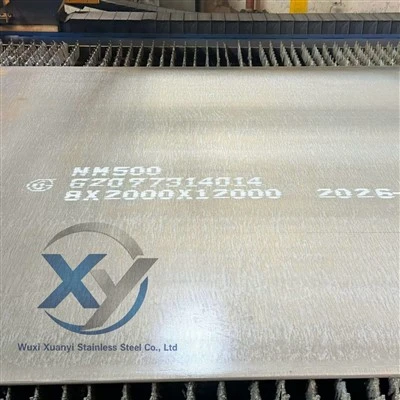
If you're shopping around for CRCS, don't be afraid to ask suppliers about their pass schedule. A good supplier will be able to explain how they build it, what parameters they use, and how that translates to the quality of the final product. For us, that's not some secret recipe-it's the reason our customers come back, time and time again. We link our standard CRCS products right here: check out our Cold Rolled Carbon Steel Coil for bulk orders, our Cold Rolled Carbon Steel Strip for precision parts, or our Cold Rolled Carbon Steel Sheet for cutting to size.
At the end of the day, cold rolling carbon steel is a balance of science and experience. The pass schedule is the backbone of that process-get it right, and you get steel that's consistent, strong, and ready to work for your application. If you're ready to place an order or have questions about your specific project, reach out to our team. We're here to help you get the right CRCS product with the exact specs you need.
References
- "Cold Rolling Process and Pass Schedule Design" – American Iron and Steel Institute, 2021
- "Metallurgy of Carbon Steel Cold Rolling" – Journal of Materials Processing Technology, Vol. 278, 2020
- "Quality Control in Cold Rolled Carbon Steel Production" – Steel Industry Technical Manual, 2022