
Handling cold rolled stainless steel coil is a task that requires careful attention to safety. As a supplier of Cold Rolled Stainless Steel Coil, I've seen firsthand the importance of following safety protocols. In this blog, I'll share some key safety precautions that you should take when dealing with these coils.
Personal Protective Equipment (PPE)
First and foremost, wearing the right personal protective equipment is non - negotiable. You need safety glasses to protect your eyes from any flying debris or particles that might get dislodged during handling. Stainless steel can be sharp, especially at the edges of the coils, so cut - resistant gloves are a must. These gloves can prevent serious cuts and abrasions that could occur when you're moving or positioning the coils.
A hard hat is also essential. There's always a risk of objects falling from above, especially in a warehouse or industrial setting where coils are stored and moved around. Steel - toed boots are another piece of PPE that you shouldn't skip. They can protect your feet from heavy coils that might accidentally roll over them or from dropped tools.
Handling Equipment
Using the correct handling equipment is crucial for safety. Forklifts are commonly used to move cold rolled stainless steel coils. Make sure the forklift is in good working condition, and the operators are well - trained. The forks should be properly adjusted to fit the coil's diameter and weight. If the forks are too short or poorly positioned, the coil can become unstable and fall off the forklift, causing serious injury.
Slings are also used to lift the coils. Ensure that the slings are made of high - strength materials and are rated for the weight of the coils you're handling. Damaged or worn - out slings should be replaced immediately. When using slings, they should be placed correctly around the coil to prevent it from slipping.
For moving smaller coils or strips, a hand pallet truck can be used. Just like with forklifts, check the pallet truck for any signs of damage before use. It should be able to roll smoothly, and the brakes should be in good working order.
Storage Safety
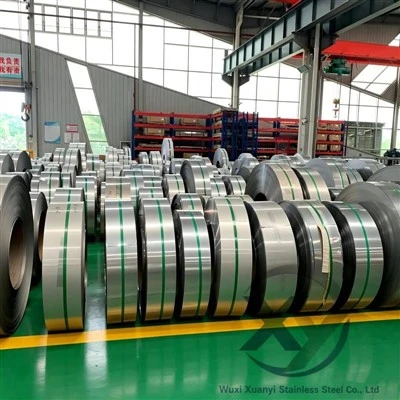
Proper storage of cold rolled stainless steel coils is equally important. Coils should be stored on a flat, stable surface. If the surface is uneven, the coils can tip over, posing a significant safety hazard. Stacking coils should be done with care. The bottom coil should be strong enough to support the weight of the coils on top. Limit the height of the stack to prevent the risk of collapse.
When storing the Cold Rolled Stainless Steel Strip Coil, make sure they are separated by spacers. This helps to prevent the coils from rubbing against each other, which could damage the stainless steel surface and also reduce the risk of the coils becoming entangled.
Environmental Considerations
The environment where the coils are handled also matters. The area should be well - lit so that workers can clearly see what they're doing. Poor lighting can lead to accidents, such as tripping over equipment or misjudging the position of a coil.
Ventilation is important, especially if there are any processes involved that could generate dust or fumes. Some cold rolled stainless steel may have coatings or undergo finishing processes that produce harmful substances. Adequate ventilation can help to remove these contaminants from the air.
Keep the work area clean and free of debris. Tools and other equipment should be stored properly when not in use. This reduces the risk of slips, trips, and falls, which are common injuries in industrial settings.
Training and Education
All workers involved in handling cold rolled stainless steel coils should receive proper training. They need to know how to use the handling equipment safely, how to store the coils correctly, and how to recognize potential safety hazards. Regular safety training sessions should be conducted to refresh the workers' knowledge and introduce them to any new safety procedures.
In addition to formal training, on - the - job supervision is important. Experienced workers should be available to guide new employees and ensure that they are following the safety protocols.
Hazard Identification
Before starting any handling operation, it's important to identify potential hazards. Look for signs of damage on the coils, such as cracks or loose edges. Check the handling equipment for any problems, like leaks in the forklift's hydraulic system or frayed slings.
Be aware of the surrounding environment. Are there any other workers in the area? Is there enough space to move the coils safely? Identifying these hazards early can help to prevent accidents from happening.
Emergency Preparedness
Even with all the safety precautions in place, accidents can still happen. That's why it's important to have an emergency plan. There should be first - aid kits readily available in the work area, and workers should know how to use them. In case of a more serious accident, such as a fire or a major spill, there should be clear evacuation routes and procedures.
Regular emergency drills should be conducted so that workers know what to do in an emergency situation. This can help to minimize the damage and keep everyone safe.
Quality Control and Inspection
Quality control and inspection also play a role in safety. Before sending out the cold rolled stainless steel coils, we conduct thorough inspections to ensure that they meet the required standards. A faulty coil could break or deform during handling, leading to accidents.
Inspection of handling equipment is also essential. Regular maintenance checks should be carried out on forklifts, slings, and other tools to ensure they are in good working condition.
Conclusion
Handling cold rolled stainless steel coils safely is a top priority. By following the safety precautions I've outlined in this blog, you can reduce the risk of accidents and injuries in your workplace. Always wear the appropriate PPE, use the right handling equipment, store the coils properly, and be aware of the environmental factors.
If you're in the market for high - quality cold rolled stainless steel coils, we're here to help. We offer a wide range of products that meet the highest industry standards. Contact us for more information and to start a procurement discussion. We look forward to working with you to meet your stainless steel needs.
References
- Occupational Safety and Health Administration (OSHA) guidelines on handling heavy materials.
- Industry best practices for stainless steel coil handling.