

If you've ever worked with stainless steel, you know that not all hot rolled coil is created equal. As someone who's been supplying hot rolled stainless steel coil for over a decade, I've seen firsthand how one tiny detail-surface roughness-can make or break a project. Some folks new to the game might write it off as a minor, cosmetic thing, but trust me, it's way more than that. It affects everything from how easy the material is to work with, to its performance years down the line. Let me break this down like I would for a new fabricator who just started ordering from us.
First, let's get on the same page about what surface roughness actually means here. When we roll stainless steel hot, we heat it up way above its recrystallization temperature (for most grades, that's around 1,000°C or 1,832°F) and pass it through rollers to get it to the thickness you need. As it cools, the surface gets little peaks, valleys, and irregularities-measured in Ra values, which are microinches or micrometers of unevenness. A low Ra means a smoother surface; a higher Ra means rougher, more textured.
Now, let's talk about how this impacts fabrication. If you're bending, forming, or deep drawing the coil, surface roughness is a huge deal. I've had a customer call me once, panicking because their hot rolled stainless steel strip coil kept cracking when they were forming it into automotive trim. Turns out, they ordered a higher Ra coil because it was cheaper, not realizing that the rough peaks acted like stress points. When you bend the material, those little high spots create concentrated pressure-way more than a smooth surface would. That leads to microcracks that grow over time, which is a nightmare for parts that need to hold up. We adjusted their order to a lower Ra
and the problem was gone. The smoother surface let the material deform evenly without those stress risers.
Welding is another area where roughness matters. If the surface is super rough, there's a good chance there's dirt, oxidation, or even tiny metal particles trapped in the valleys. When you weld, those impurities can cause porosity in the weld-those little holes that weaken the joint. I've seen welds that looked perfect on the outside fall apart a few months later because of hidden porosity from a dirty, rough surface. It also affects how the weld bead lays down. A smooth surface gives a cleaner, more consistent weld, which means less grinding and finishing work later. For fabricators, that translates to time saved and lower labor costs-something everyone cares about these days.
Next up, corrosion resistance. Stainless steel's whole superpower is that chromium-rich passive layer that forms on the surface, protecting it from rust. But if the surface is rough, that layer is way harder to maintain. The little valleys and crevices trap moisture, salt, and other contaminants. Think about a coil used for marine parts or outdoor equipment-those rough spots will hold onto water like a sponge. Over time, that leads to crevice corrosion, which is one of the most common issues with stainless steel. We had a customer in the marine industry a couple years back who switched to our
with a controlled low Ra surface, and they reported a 70% drop in corrosion-related repairs compared to their previous supplier's rougher material. The smooth surface meant there were fewer places for contaminants to hide, so the passive layer stayed intact longer.
Surface roughness also plays a role in coating and finishing, if you're planning to paint, powder coat, or apply a decorative finish. A rough surface doesn't hold paint as well-there's less contact area, so the coating can chip or peel easily. On the flip side, some texture can be good for grip, but only if it's controlled. If you're making something like a step tread or a handrail, a little intentional roughness might be what you want. The key is that it's uniform roughness, not the random, inconsistent peaks from a poorly processed coil. We work with our customers to figure out exactly what Ra value they need based on their end use-no one-size-fits-all here. I always tell them, "Tell me what you're making, and I'll point you to the right surface roughness."
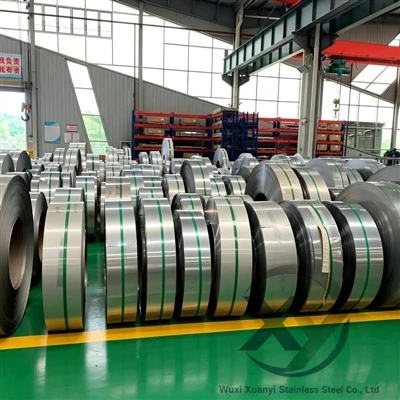
Durability and wear are another big one. If the hot rolled stainless steel coil is going to be used in a high-wear application-like conveyor parts, industrial machinery, or even cookware-surface roughness affects how quickly it wears down. A rough surface will have more friction when two parts rub together, leading to faster wear. The peaks will get knocked off, leaving behind deeper valleys, which can cause parts to fit poorly or even fail. A smoother, more uniform surface reduces friction, so the part lasts longer. We had a customer making conveyor belts for a food processing plant who used to have to replace their parts every 6 months. After switching to our low Ra hot rolled stainless steel strip coil, they're going on 2 years without issues. The smooth surface cut down on friction and made it easier to clean too, which was a double win for them.
Wait, let's not forget about appearance. Even if the part is functional, if it's going to be visible, surface roughness matters. A rough surface will look dull and uneven, while a smooth one has a consistent, clean finish. For architectural parts, like building facades or trim, that's non-negotiable. I've had architects specify a very low Ra for projects where the stainless steel is a key design feature. They don't want random texture or color unevenness from the rough surface. That said, some industrial applications actually benefit from a slightly rougher surface-for example, when you need to grip the material during processing, a controlled roughness helps with tooling hold. It's all about matching the roughness to the job.
Now, how does a supplier control surface roughness? It's not just random-we have a lot of processes in place. The first step is the rolling mill: the texture of the rollers themselves, the pressure applied during rolling, and the cooling rate all affect the final surface. We use precision-ground rollers to get a uniform surface, and we monitor every coil with surface roughness meters before it leaves our warehouse. We also offer different finishes: hot rolled, annealed, pickled, and sometimes a light skin pass to smooth it out a bit. Skin passing is a light roll that reduces roughness slightly and also improves dimensional accuracy, which is a bonus for fabrication.
I think the biggest mistake people make is not asking about surface roughness upfront. A lot of customers just order "hot rolled stainless steel coil" without specifying Ra, and they end up with material that's not right for their project. As a supplier, I always bring it up, even if it's not in their initial request. For example, if someone is making deep-drawn kitchen sinks, I'll recommend a lower Ra than if they're making a structural part that doesn't need as much forming. It's part of our job to know our material and help our customers avoid costly mistakes.
Let me wrap this up with a real example from last year. We had a custom furniture maker reach out, frustrated because their previous stainless steel coil was leaving rough edges and requiring way too much sanding to get a smooth finish for their high-end tables. They ordered our
with a 1.6 Ra surface (that's a common value for decorative applications). When they used it, they told us their sanding time dropped by 50%, and the final finish was much more consistent. They even started using us exclusively for all their stainless steel needs, which is the kind of relationship we build by paying attention to the small details-like surface roughness.
At the end of the day, surface roughness isn't just a technical spec. It's a critical factor that impacts fabrication speed, part performance, durability, cost, and even appearance. Whether you're a fabricator, architect, or manufacturer, taking the time to get the right surface roughness for your hot rolled stainless steel coil will save you time, money, and headaches down the line.
If you're working on a project and you're not sure what surface roughness you need, don't guess. Reach out-we're here to help you figure out the best material for your specific application. We've got the expertise to walk you through every step, from selecting the right grade of stainless steel to getting the perfect surface roughness. Let's chat about your project, and I'll make sure you get the hot rolled stainless steel coil that works for you.
References
- Stainless Steel Handbook, American Iron and Steel Institute, 2020.
- Surface Roughness Effects on the Formability of Hot Rolled Stainless Steel, Journal of Materials Processing Technology, Vol. 267, 2019, pp. 123-131.
- Corrosion Behavior of Stainless Steel with Controlled Surface Roughness, Corrosion Science, Vol. 156, 2019, pp. 108472.
- Hot Rolling and Surface Finish of Stainless Steel Coils, Stainless Steel World Magazine, October 2021.
- Fabrication Best Practices for Hot Rolled Stainless Steel, Fabricator's Guide, 2022.