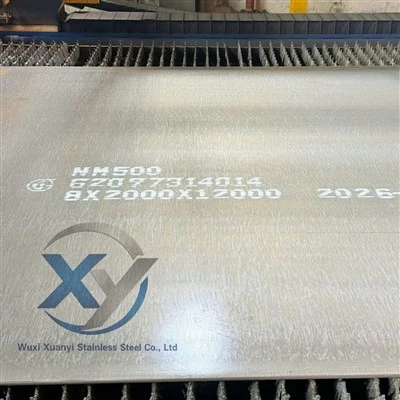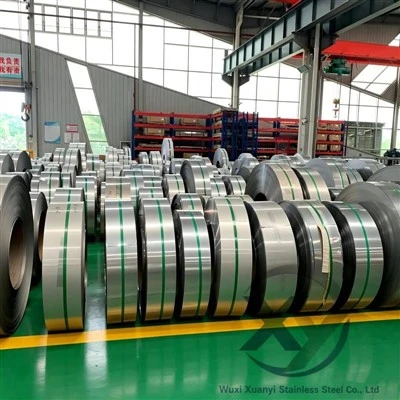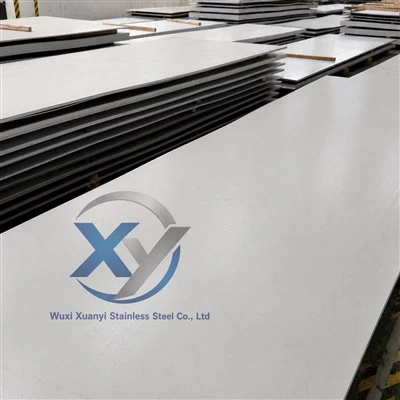

In 2026, China's domestic stainless steel industry has bid farewell to the era of extensive scale expansion. Driven by policy regulation, emerging market demand and green transition, the sector keeps optimizing its industrial structure, upgrading product portfolios and refining the industrial chain layout, fully stepping into a new era of high-quality development marked by high-end positioning, refined production and low-carbon operation. Guided by standardized policies and empowered by downstream emerging industries, the supply-demand landscape of the industry keeps improving and its core competitiveness grows steadily, laying a solid material foundation for the development of manufacturing supporting sectors, new infrastructure, new energy and other fields.
Sustained Rollout of Regulatory Policies Drives Standardized Industrial Development
The revised Measures for the Implementation of Production Capacity Replacement in the Iron and Steel Industry issued by the Ministry of Industry and Information Technology (MIIT) officially took effect in May 2026. For the first time, stainless steel is incorporated into the unified national production capacity assessment system for the iron and steel sector. Through measures including capacity reduction-based replacement, strict curbs on unregulated capacity expansion and standardized production and operation, the policy eliminates fragmented regional regulatory practices and establishes a unified, standardized and orderly national industrial supervision framework.
The industry has completely shifted away from the traditional development model that prioritized output over quality. Centered on optimizing existing capacity and phasing out backward production lines, it advances transformation along three major tracks: structural optimization, industrial chain coordination and global market adaptation. Regularized, refined policy oversight has effectively curbed homogeneous low-efficiency capacity, channeled industrial resources toward high-end production lines, leading enterprises and innovation-driven segments, and continuously consolidated the foundation for high-quality industrial growth.
Optimized Supply-Demand Structure Unlocks Growth Potential in Emerging Segments
As capacity control measures deliver tangible results, the growth rate of domestic stainless steel supply has moderated steadily in 2026, easing pressures from overcapacity and greatly improving the alignment between supply and demand. On the production side, large-scale deployment of high-end continuous rolling lines has propelled the industry's shift from conventional sheet production to high value-added products such as precision profiles and premium special plates, with marked improvements in processing precision and consistent product quality.
On the demand side, the market features a sound dynamic where traditional sectors sustain baseline consumption while emerging sectors drive expanded demand. Steady demand from construction, municipal engineering and consumer livelihood sectors underpins the industry's fundamental market volume. Meanwhile, new energy vehicles, hydrogen energy, liquid cooling for AI computing power, high-end equipment, marine engineering, medical care and other emerging industries constitute the core growth drivers for stainless steel consumption. Booming downstream emerging industries have spurred surging demand for high-grade stainless steel such as 316L and specialty stainless steel. Coupled with the gradual refinement of relevant national industry standards, the application scenarios for high-end products have further expanded, lifting the overall standardized development level of the sector.
Comprehensive Green and Low-Carbon Transition Fuels Long-Term Industrial Growth
Aligned with the national dual-carbon goals, eco-friendly manufacturing and low-carbon processes have become core development principles for the stainless steel industry. The entire sector carries out energy-saving and carbon-reduction upgrades across smelting, rolling and deep processing workflows, widely deploying advanced environmental technologies including short-process smelting, waste heat recovery and ultra-low emissions control to cut production energy consumption and carbon footprints.
Currently, the industry has built a full-chain development framework covering green manufacturing, eco-friendly products and low-carbon applications. Leading enterprises are actively tapping into the low-carbon stainless steel product segment and upgrading their process systems in line with international green production benchmarks. The green transition not only helps enterprises lower operating costs and boost efficiency, but also serves as a core competitive edge for China's stainless steel industry to compete in global markets.
Accelerated Industrial Quality Upgrade to Break Through Amid Global Market Competition
Faced with a shifting global trade landscape, international green trade barriers and evolving overseas policies, China's stainless steel sector has abandoned the model of low-price homogeneous competition. It prioritizes R&D of high-end, refined and customized products, specializes in premium categories including corrosion-resistant, ultra-high-purity and specialty stainless steel, continuously improves the independent industrial chain and raises the self-sufficiency rate of high-end products. Meanwhile, the industry proactively aligns with global green trade rules, refines product quality and low-carbon certification systems, and steadily strengthens its discourse power and brand influence on the international stage.
Industry experts note that 2026 marks a pivotal year for the stainless steel industry to shift growth drivers and upgrade its industrial structure. Moving forward, the sector will strictly adhere to capacity control requirements, capitalize on incremental market opportunities in emerging industries, and deepen technological innovation and green transition to advance clustered, standardized and high-end industrial development. Sustained industrial upgrading and technological iteration will enable China's stainless steel industry to deliver high-performance, reliable material supplies for strategic emerging industries including high-end manufacturing, new energy and new infrastructure, securing sound and sustainable high-quality development of the sector.