

China's large-scale equipment renewal program continues to advance in 2026. According to the National Development and Reform Commission, RMB 200 billion in ultra-long special treasury bond funds has been allocated this year to support equipment renewal, covering around 11,000 projects across 22 fields. From January to May, investment in equipment and instruments increased by 9.3% year on year, accounting for 17.5% of total investment. From energy and power to logistics, commercial facilities and industrial production, equipment modernization is gradually expanding into a wider range of practical applications.
For the materials industry, the significance of equipment renewal is not simply about whether more steel will be purchased. More importantly, as manufacturing equipment becomes more advanced, manufacturers are placing greater emphasis on the specifications and performance of the materials they use. In the past, a material order might have focused mainly on grade, thickness, width and quantity. Today, for many industrial equipment projects, surface condition, dimensional tolerance, flatness, edge quality and downstream processing requirements may all need to be confirmed in advance. The more precise the equipment, the more important material consistency becomes during cutting, bending, welding and assembly.
Equipment Upgrades Are Making Material Requirements More Specific
When companies replace production lines or industrial equipment, the change often involves more than the main machine itself. Supporting structures, tanks, pipelines, housings and processing components may also need to be redesigned to meet new production standards. This directly affects material selection. Food processing equipment, for example, places greater emphasis on cleanliness and corrosion resistance, while chemical and environmental protection equipment requires materials to be evaluated according to the specific media involved. Equipment exposed to humid or outdoor conditions may also place more importance on durability and maintenance cycles.
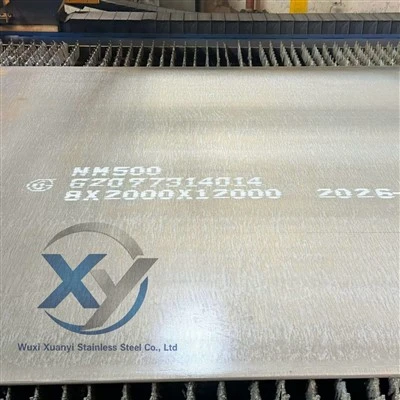
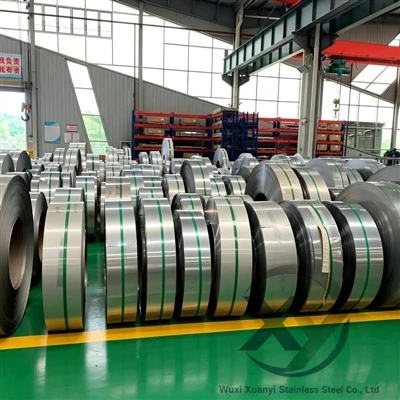
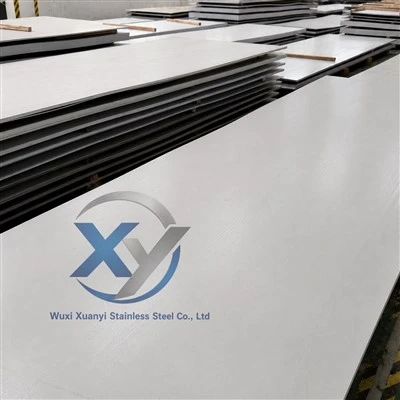
Stainless steel is commonly used in many of these applications, but purchasing decisions cannot be based on grade alone. Even when the same stainless steel grade is used in different types of equipment, requirements for surface finish, dimensions and processing condition may vary considerably. For coil products, customers may also need to confirm inner diameter, coil weight and edge condition. For sheet products, additional processing such as slitting, cut-to-length, brushing or oil grinding may be required. In other words, material supply is gradually shifting from simply providing standard specifications to matching the actual requirements of the final application.
Material Selection Is Becoming Part of Equipment Life-Cycle Planning
The purpose of equipment renewal is not only to replace old machinery with newer models. Manufacturers also consider operating stability, maintenance costs, service life and long-term production efficiency. For components that are regularly exposed to water, moisture, cleaning processes or corrosive media, material durability can directly affect maintenance frequency and the overall service life of the equipment.
Rather than simply assuming that large-scale equipment renewal will automatically increase stainless steel demand, it is more accurate to say that equipment modernization is making industrial material purchasing more specialized and application-specific. For stainless steel suppliers, future competitiveness will depend not only on the ability to provide the required grade and dimensions, but also on understanding where and how the material will be used and supporting customers with suitable specifications, processing and delivery requirements.