
Hey there! As a stainless steel supplier, I've gotten a ton of questions about the weldability of different grades of stainless steel. So, I thought I'd break it down for you all in this blog post.
First off, let's talk about what weldability actually means. Weldability refers to how easily a material can be welded to form a strong, reliable joint. When it comes to stainless steel, several factors affect its weldability, including its composition, microstructure, and the welding process used.
Austenitic Stainless Steels
Austenitic stainless steels are the most common type of stainless steel, known for their excellent corrosion resistance and formability. Grades like 304 and 316 are super popular in a wide range of applications, from kitchen appliances to architectural structures.
The good news is, austenitic stainless steels generally have great weldability. They don't harden during welding, which means they're less likely to crack. This is because they have a high manganese content and are typically non - magnetic in their as - welded state.
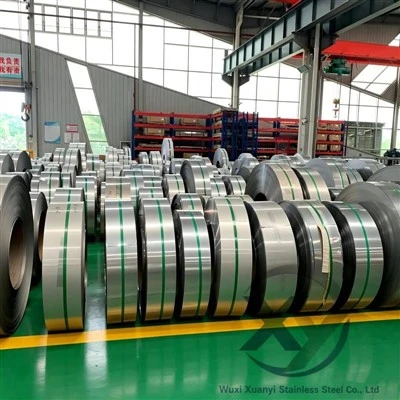
When welding austenitic stainless steels, it's important to use a filler metal that matches the base metal as closely as possible. For 304 stainless steel, a 308 or 309 filler is often used. For 316 stainless steel, a 316L filler is a common choice. If you're in the market for austenitic stainless steel, you can check out our Cold Rolled Stainless Steel Coil, which offers excellent weldability and can be used in various welding projects.
However, there's a little thing called sensitization that can happen during welding. When austenitic stainless steels are heated in the range of 800 - 1500°F (427 - 816°C), chromium carbides can form at the grain boundaries. This depletes the chromium in those areas, reducing the corrosion resistance. To prevent this, you can use low - carbon grades like 304L and 316L, or perform a post - weld heat treatment.
Ferritic Stainless Steels
Ferritic stainless steels, like 409, 430, and 439, are known for their good corrosion resistance and high thermal conductivity. They're commonly used in automotive exhaust systems and kitchenware.
In terms of weldability, ferritic stainless steels are a bit more challenging than austenitic ones. They tend to harden during welding, making them more prone to cracking. This is because they have a body - centered cubic (BCC) crystal structure, which can change when heated.
To improve the weldability of ferritic stainless steels, pre - heating the material before welding is often necessary. This helps to reduce the cooling rate and minimize the formation of hard, brittle microstructures. You can also use a filler metal with a higher nickel content to help prevent cracking. Our Hot Rolled Hairline Stainless Steel Plate is a great option if you're looking for ferritic stainless steel for your projects.
Martensitic Stainless Steels
Martensitic stainless steels, such as 410, 420, and 440, are known for their high strength and hardness. They're often used in cutlery, tools, and turbine blades.
Weldability is a real concern when it comes to martensitic stainless steels. They harden significantly during welding, and if not properly controlled, can crack easily. Pre - heating is essential, and a post - weld heat treatment is almost always required to relieve the internal stresses and improve the ductility of the weld.
When welding martensitic stainless steels, it's crucial to use a low - hydrogen welding process to avoid hydrogen embrittlement. A filler metal with a high nickel content is also recommended to improve the toughness of the weld. If you're interested in martensitic stainless steel products, our Hot Rolled Stainless Steel Coils might fit your needs.
Duplex Stainless Steels
Duplex stainless steels, like 2205 and 2507, are a combination of austenite and ferrite. They offer a good balance of strength, corrosion resistance, and weldability.
The weldability of duplex stainless steels is generally good, but it does require some attention. The key is to maintain the right balance between austenite and ferrite in the weld metal. If the cooling rate is too fast, too much ferrite can form, which can reduce the corrosion resistance and toughness of the weld.
To ensure proper weld quality, use a filler metal specifically designed for duplex stainless steels. Pre - heating is usually not necessary for thin sections, but it may be required for thicker ones. Check out our Cold Rolled Brushed Stainless Steel Sheet if you're considering using duplex stainless steel sheets in your welding projects.
Welding Processes for Stainless Steel
There are several welding processes that can be used for stainless steel, each with its own advantages and disadvantages.
- TIG (Tungsten Inert Gas) Welding: This process is great for welding thin sections of stainless steel. It provides precise control over the weld pool and produces high - quality, clean welds. However, it's a relatively slow process and requires more skill to operate.
- MIG (Metal Inert Gas) Welding: MIG welding is faster than TIG welding and is suitable for thicker sections. It uses a wire electrode that is continuously fed into the weld pool. The shielding gas protects the weld from oxidation.
- Stick Welding: Stick welding, also known as Shielded Metal Arc Welding (SMAW), is a versatile process that can be used in a variety of environments. It's easy to set up and can be used to weld stainless steel in all positions. However, it produces more slag and requires more cleanup compared to TIG and MIG welding.
Conclusion
In conclusion, the weldability of different grades of stainless steel varies widely. Austenitic stainless steels are generally the easiest to weld, while martensitic stainless steels are the most challenging. Understanding the specific characteristics of each grade and using the right welding techniques and filler metals are crucial for achieving high - quality welds.
If you're looking for high - quality stainless steel products for your welding projects, we've got a wide range of options available, including Stainless Steel Sheets. Whether you're a professional welder or a DIY enthusiast, our products are designed to meet your needs.
If you have any questions about the weldability of our stainless steel grades or want to discuss your specific requirements, don't hesitate to reach out. We're here to help you select the right material and provide the best solutions for your projects. Start the conversation with us, and let's find the perfect stainless steel for your welding needs!


References
- Metals Handbook: Welding, Brazing, and Soldering, ASM International
- Welding Metallurgy, John C. Lippold and David J. Kotecki
- Stainless Steel: A Technical Guide, ASM International