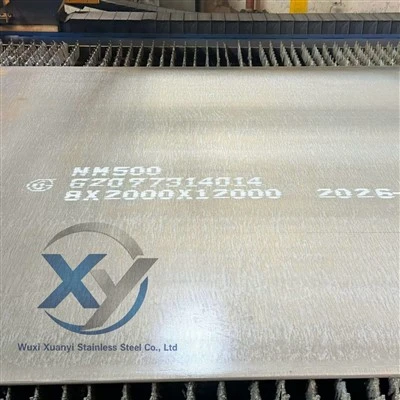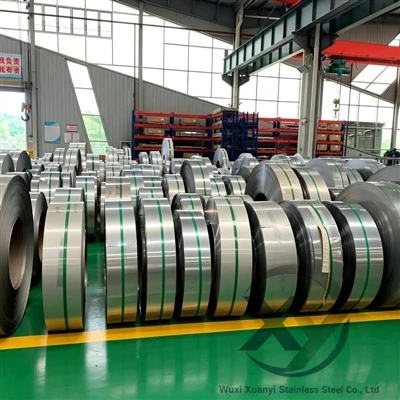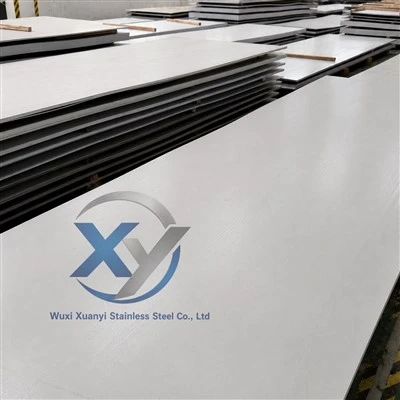


If you've ever watched a large metal fabrication plant shape thick sheets into chassis parts, tanks, or agricultural equipment, you've probably wondered how hot rolled carbon steel-one of the most widely used metals on the planet-bends, stretches, and takes those forms without cracking or breaking. As a hot rolled carbon steel supplier who's worked with this material for over a decade, I've learned that formability isn't a single trait; it's a balance of chemistry, manufacturing process, and how you work with the material once it leaves the mill. Today, I want to break down what hot rolled carbon steel formability actually means, what factors shape it, and how our products like Hot Rolled Carbon Steel Coil, Hot Rolled Carbon Steel Sheet, Hot Rolled Carbon Steel Plate, and Hot Rolled Carbon Steel Strip are engineered to meet the form needs of every project, from small brackets to heavy structural builds.
First, let's get clear on definitions. Hot rolled carbon steel is made by heating steel slabs above their recrystallization temperature (usually around 1,700°F for carbon steel) and rolling them to shape before they cool. This process is different from cold rolled steel, which is formed at room temperature, and it leaves the material with a unique surface texture, grain structure, and mechanical properties that directly impact formability. Simply put, formability is the material's ability to undergo plastic deformation-bending, deep drawing, stretching, or shaping-without tearing, cracking, or surface defects. For fabricators, a steel that's highly formable means fewer scrap parts, faster production, and the ability to create complex shapes that would be impossible with lower-quality or incorrectly processed steel.
Chemistry is the most foundational factor here. Carbon content is the biggest influencer on formability. Low carbon steel (up to 0.30% carbon) is the most formable, because lower carbon levels mean fewer strong, rigid grain boundaries that resist stretching. This is why most deep-drawn parts, like automotive body panels or kitchen appliances, are made from low carbon hot rolled steel. Medium carbon steel (0.30% to 0.60% carbon) is stronger but less formable-it works well for parts that need both strength and a moderate shape, like truck frames or agricultural plows. High carbon steel (over 0.60% carbon) is extremely hard but almost impossible to form without cracking, so it's reserved for tools, springs, and wear parts where formability is less critical than hardness. It's not just carbon, either; trace elements like manganese, silicon, and sulfur play roles. Manganese improves strength slightly without killing formability, while too much sulfur can cause hot shortness-a defect where the steel cracks when formed at high temperatures, a risk to anyone working with hot rolled products. When we source and process our hot rolled carbon steel products, we test every batch to ensure chemistry stays within tight ranges tailored to their intended use, whether that's a Hot Rolled Carbon Steel Coil for roll forming or a Hot Rolled Carbon Steel Plate for heavy bending.
Next, the hot rolling process itself shapes formability more than most people realize. When you heat steel above recrystallization temperature, the grains break down and rearrange into a uniform, equiaxed structure-this is key for formability, because equiaxed grains slide past each other easily during deformation, unlike the long, stretched grains you get from cold rolling or improper hot rolling. The finish of the hot rolled material also matters. Our hot rolled products have a mill scale surface, which is a thin oxide layer that's usually removed later, but it actually aids formability in some early-stage processes by reducing friction between the steel and forming tools. Unlike cold rolled steel, which has a smooth, shiny finish that's great for painting but has tighter dimensional tolerances, hot rolled steel has slightly looser tolerances that make it easier to work with when forming large, irregular shapes. That's why many structural steel fabricators prefer our Hot Rolled Carbon Steel Sheet and Hot Rolled Carbon Steel Plate for custom fabrication jobs.
But formability isn't just about the steel's inherent properties-it's also about how fabricators choose to work with it. The same hot rolled steel can perform very differently depending on the forming method, temperature, and tooling used. Let's walk through common forming methods and what they need from steel:
Bending is one of the simplest and most common forming operations, used for everything from small L-brackets to large structural angles. For bending, the key metric is bend radius-the minimum radius the steel can be bent without cracking. Low carbon hot rolled steel can usually bend to a radius equal to its thickness (or even smaller with proper lubrication), while medium carbon might need a radius 1.5 to 2 times its thickness. A common mistake fabricators make is not accounting for direction of the steel's grain. Hot rolled steel has a directional grain from the rolling process, so it's much easier to bend along the grain than across it. That's why we always include grain direction markings on our Hot Rolled Carbon Steel Strip and coils, and we advise our customers to design parts so bending aligns with the grain whenever possible.
Deep drawing is a more complex process, where a flat steel blank is pressed into a die to create a hollow shape, like a metal pot or a gas tank. For deep drawing, formability is measured by the Limiting Draw Ratio (LDR)-the ratio of the blank diameter to the largest draw diameter possible without tearing. Low carbon hot rolled steel has an LDR of around 2.0 to 2.2, which is ideal for deep drawing. This is why automotive parts and kitchen sink manufacturers often rely on our low carbon hot rolled coil, because it can handle multiple drawing steps without failing, reducing the need for intermediate annealing (a process that softens steel but adds time and cost). Of course, even the most formable steel needs proper lubrication during deep drawing to prevent tearing, and we always include recommendations for lubrication based on our material grade.
Stretch forming is used for large, curved parts, like aircraft panels or building facade components. In this process, the steel is pulled and stretched along multiple axes, so it needs high uniform elongation-the amount it can stretch before breaking. Low carbon hot rolled steel typically has elongation values of 30% to 40% in thickness, which is perfect for stretch forming, while medium carbon only has 15% to 20% elongation, making it unsuitable. Fabricators working on architectural or aerospace projects often reach out for our custom-sized Hot Rolled Carbon Steel Sheet to get the exact dimensions they need for these large, precise shapes.
Now, let's talk about common challenges that impact formability, because even the best hot rolled steel can fail if not handled right. One of the biggest is residual stress. When hot rolled steel cools unevenly after processing, it develops internal stresses that can cause warping or cracking during forming. That's why many of our customers use stress relieving annealing for thick Hot Rolled Carbon Steel Plate before forming-this reduces residual stress and makes the material more stable during bending or stretching. Another challenge is springback. Springback is when the steel springs back slightly after forming, meaning it doesn't hold its shape exactly as designed. Low carbon hot rolled steel has more springback than medium carbon, which is something fabricators account for by over-bending the part slightly during the forming process. We publish technical data sheets for all our products that include springback values and recommended compensation, so customers don't have to guess.
As a supplier, we don't just sell steel-we provide formability support tailored to our customers' needs. For example, a small fabricator making custom metal signs might need a thin, highly formable Hot Rolled Carbon Steel Strip that bends sharply without cracking, while a large construction firm building bridges might need thick Hot Rolled Carbon Steel Plate that can be bent into curved girders for overpasses. We grade our products by carbon content and mechanical properties, so you can pick the right one for your form job without overpaying for extra strength you don't need. We also offer custom cuts, precision slitting for coils, and on-site technical support for complex projects-last year, we worked with a wind turbine manufacturer to refine a high-formability grade of our hot rolled coil that could handle the deep drawing needed for turbine tower end caps, cutting their scrap rate by 18%.
I want to clear up a common misconception too: many people think hot rolled steel is less formable than cold rolled steel, but that's not always true. Cold rolled steel is smoother and has tighter tolerances, but it's work-hardened by the cold rolling process, which makes it less formable than hot rolled steel of the same carbon content. Hot rolled steel's as-rolled grain structure is more ductile, so it can undergo more deformation before failing. The only time cold rolled is better for formability is for very complex, small parts like electronics brackets, where tight dimensional control is critical. For most larger, more demanding forming jobs, hot rolled carbon steel is the better, more cost-effective choice.
When choosing hot rolled carbon steel for your project, here's a quick guide to match form needs to product type: if you're doing roll forming for pipes, guardrails, or automotive frames, our Hot Rolled Carbon Steel Coil is ideal, as it's made to be fed continuously through roll forming machines with consistent formability. If you're cutting and bending medium-sized parts like brackets or enclosures, our Hot Rolled Carbon Steel Sheet comes in standard and custom sizes with uniform grain structure. For heavy structural parts like crane arms or bridge components, thick Hot Rolled Carbon Steel Plate has the strength and formability to handle large bending loads. And for small, precise parts like springs, fasteners, or metal stamping blanks, our Hot Rolled Carbon Steel Strip offers tight dimensional tolerances and consistent formability for high-volume stamping.
Let's also touch on quality control, because it's what ensures every batch of our steel has reliable formability. We test every coil, sheet, plate, and strip for tensile strength, elongation, yield strength, and grain size before it leaves our mill. We track chemistry through every step of production, so we can trace any batch back to its original slab if there's a formability question. Last quarter, we introduced a new low-carbon grade of our hot rolled products specifically optimized for deep drawing and stretch forming, tested to meet ISO formability standards, and it's been a hit with fabricators making kitchen appliances and solar panel components.
At the end of the day, formability is what makes hot rolled carbon steel the backbone of so many industries. It's not just a material property-it's a balance of science, process, and the right product for your job. Whether you're a small fabricator building custom furniture or a large OEM making heavy machinery, choosing the right hot rolled carbon steel product is the first step to reducing scrap, speeding up production, and getting the shape you need. If you're working on a project and want to talk through which grade or product is best for your form needs, our team is here to help. Reach out to our sales and technical support team to discuss your requirements, get a custom quote, or ask specific questions about formability for your application.
References
- Kalpakjian, S., & Schmid, S. R. (2020). Manufacturing Processes for Engineering Materials (8th ed.). Pearson Education.
- American Iron and Steel Institute. (2019). Hot Rolled Carbon Steel Standards and Properties. AISI Technical Report.
- Groover, M. P. (2019). Fundamentals of Modern Manufacturing: Materials, Processes, and Systems (7th ed.). John Wiley & Sons.
- Tschätsch, H., & Dietrich, J. (2021). Formability of Metals: Fundamentals and Applications. Springer-Verlag.