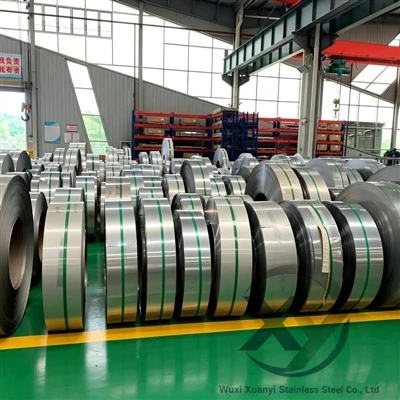


Hey there, if you've ever wondered why stainless steel hot rolled plates don't all act the same-why some stand up to salt water like a champ, others hold up way better to high-heat welding, or why you can find a version for pretty much any industrial job-you're in the right spot. I've been selling stainless steel hot rolled plate for over 12 years, and let me tell you, it's the mix of tiny alloying elements that makes all the difference. Most folks see "stainless steel" and think it's just one metal, but it's way more like a recipe: swap a teaspoon of this or a pinch of that, and you get something totally different. Today, I'm breaking down exactly how those little bits change everything from strength to corrosion resistance, and why that matters if you're ordering plate for your next project.
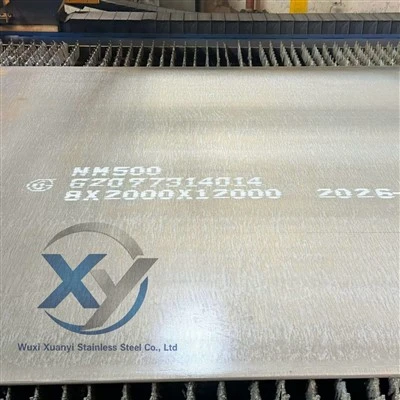
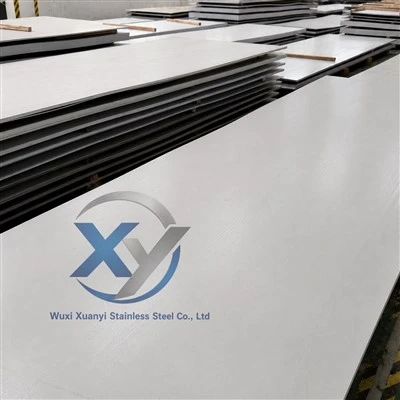
First, let's get one thing straight-we're talking about hot rolled plate here, not cold rolled. Hot rolled means we roll the steel at super high temperatures (above its recrystallization point, like over 1700°F for most grades) which makes it easier to form into thick, heavy plates, and it leaves a slightly rough, scaled surface that's perfect for jobs that don't need a mirror finish (though we have options like Hot Rolled Embossed Stainless Steel Plate for grip and Hot Rolled Hairline Stainless Steel Plate for a sleek, industrial look too, by the way). The base of any stainless steel is iron, but the alloying elements are the real stars, and each one pulls its own weight.
Let's start with the big one: chromium. You've heard a million times that stainless steel needs at least 10.5% chromium to be… well, stainless. Here's why that's not just a marketing line. When chromium hits oxygen (like in air or water), it forms a super thin, invisible, self-healing chromium oxide layer on the surface. If that layer gets scratched or damaged, the surrounding chromium reacts with oxygen to fix it right back up-no other common metal does that. For hot rolled plate, which is often used in harsh environments (think marine rigs, food processing equipment, or chemical storage tanks), that's non-negotiable. If a plate has too little chromium, that oxide layer can't form properly, and rust sets in fast. I see this all the time when a customer buys a cheap "stainless" plate that only has 11% chromium instead of the standard 16-18% for 304 grade-within a year, it's showing rust spots where the oxide layer failed.
Next up: nickel. Nickel is the unsung hero for making stainless steel flexible and corrosion-resistant in more extreme conditions. The most common grade, 304, has about 8-10% nickel, and that's why it works so well for everything from kitchen countertops to industrial piping. What nickel does is stabilize the austenite phase of steel-meaning the crystal structure stays consistent even at different temperatures, so the plate doesn't get brittle when it's cold or soft when it's hot. For hot rolled plate, that's a huge deal because hot rolling already involves extreme temperature swings during production. If you're buying plate for a project that will see sub-zero temps (like outdoor storage in northern climates) or high-heat applications (like exhaust components or furnace parts), more nickel (like in grade 316, which has 10-14% nickel) keeps the plate from cracking or deforming. I recently had a customer who switched from 304 to 316 hot rolled plate for a seafood processing plant-they used to deal with pitting from salt water, and now their plate lasts twice as long. Side note: if you need a plate that's not just functional but has a polished or grippy surface, check out our Hot Rolled Hairline Stainless Steel Plate for a consistent, easy-to-clean finish that's popular in food and medical facilities.
Then there's molybdenum, the corrosion-resistant specialist. You only see this in austenitic grades like 316, usually at 2-3%, but it makes a massive difference in harsh, chloride-heavy environments. Chloride is the enemy of stainless steel-think road salt, ocean water, even the cleaning chemicals used in hospitals. Chloride ions eat through that chromium oxide layer, causing pitting or crevice corrosion. Molybdenum forms another protective layer (molybdenum oxide) that fights off chloride way better than chromium alone. For hot rolled plate used in docks, chemical processing, or wastewater treatment, molybdenum is non-negotiable. Last year, we supplied 316 hot rolled plate to a power plant that needed it for water handling-they were using 304 before and had to replace plate every 2 years, now it's going on 5 with no issues.
Wait, what about carbon? A lot of people think carbon is bad because it makes steel stronger, but too much carbon causes problems for stainless steel. If carbon levels are over 0.03% (in low-carbon grades like 304L), it can bond with chromium to form chromium carbides at grain boundaries when the steel is heated during welding or hot rolling. That takes chromium away from the surface, so the oxide layer can't form properly, leading to intergranular corrosion-meaning the steel breaks down from the inside out along the grain lines. That's why we offer low-carbon grades for hot rolled plate that will be welded a lot-our 304L plate is way less prone to corrosion after welding, which is a big win for construction and fabrication jobs.
And let's not forget minor alloying elements that make a big impact, even in small amounts. Nitrogen, for example, is used in a lot of modern stainless steel grades (like 316LN) to boost strength without adding more nickel, which keeps costs down but doesn't sacrifice corrosion resistance. It also helps with weldability, which is perfect for hot rolled plate that gets shaped on-site. Then there's titanium and niobium-these are added to stabilize carbon, meaning they bond with carbon before it can bond with chromium, preventing that intergranular corrosion I mentioned. That's why grades like 321 and 347 are go-tos for high-temperature applications, like exhaust manifolds or furnace parts, where welding and heat are constant.
Now, let's tie this back to hot rolled plate specifically, because there's a difference between how alloying elements act in hot rolled vs. cold rolled. Hot rolling is done at such high temps that the alloying elements diffuse more easily into the iron matrix, so they're more evenly distributed throughout the plate, not just on the surface. That means the corrosion resistance and strength are consistent from top to bottom of the plate, not just the outer layer. The tradeoff is that hot rolled plate has a thicker, darker oxide scale (from the high heat) which means some people think it's less attractive, but that's where our specialty finishes come in. We've got Hot Rolled Embossed Stainless Steel Plate that has a textured surface to hide scratches and provide extra grip for steps, ramps, or truck beds, and Hot Rolled Hairline Stainless Steel Plate that has a fine, linear texture that's easy to wipe down and looks sharp for architectural projects like building facades or elevator interiors.
I've seen first-hand what happens when you pick the wrong alloy mix for the job. A few years back, a customer ordered cheap 409 grade stainless steel hot rolled plate for a food processing line. 409 has way less chromium (around 11%) and no molybdenum, so within 6 months, the plate was rusting from the food acids and cleaning chemicals. They came back to us and got 304 plate, and it's still going strong. On the flip side, I had another customer who overkill by using 316 plate for a low-storage cabinet that never saw salt water-they paid way more than they needed to. That's why it's all about matching the alloy to your specific environment and use case, not just grabbing whatever's cheapest.
So, why does all this matter if you're ordering stainless steel hot rolled plate? Because the alloying elements aren't just tiny add-ons-they're what make your plate last, perform, and fit your budget. Whether you need a plate that holds up to salt water, can handle high heat welding, has a smooth finish, or has a textured grip for safety, the mix of chromium, nickel, molybdenum, and the minor elements will determine exactly what you get.
If you're not sure which grade is right for your project, or you want to learn more about our hot rolled plate options, including specialty finishes like Hot Rolled Embossed Stainless Steel Plate and Hot Rolled Hairline Stainless Steel Plate, hit me up. I've helped hundreds of customers pick the right plate for their job, and I can walk you through everything from grade specs to delivery timelines. No pushy sales talk, just straight-up advice from someone who's been in this game long enough to know what works.
References
- ASM International. (2019). Stainless Steel: Alloying Elements and Their Effects. ASM Handbook, Volume 4: Steel Heat Treating Technology.
- Davis, J. R. (Ed.). (1994). Stainless Steels: Microstructure and Properties. ASM International.
- Sedriks, A. J. (1996). Corrosion of Stainless Steels (2nd ed.). John Wiley & Sons.
- International Organization for Standardization. (2020). ISO 15510: Stainless Steels - Chemical Composition.